Kids often go to one parent when they want to play and turn to the other when they need help solving a problem.
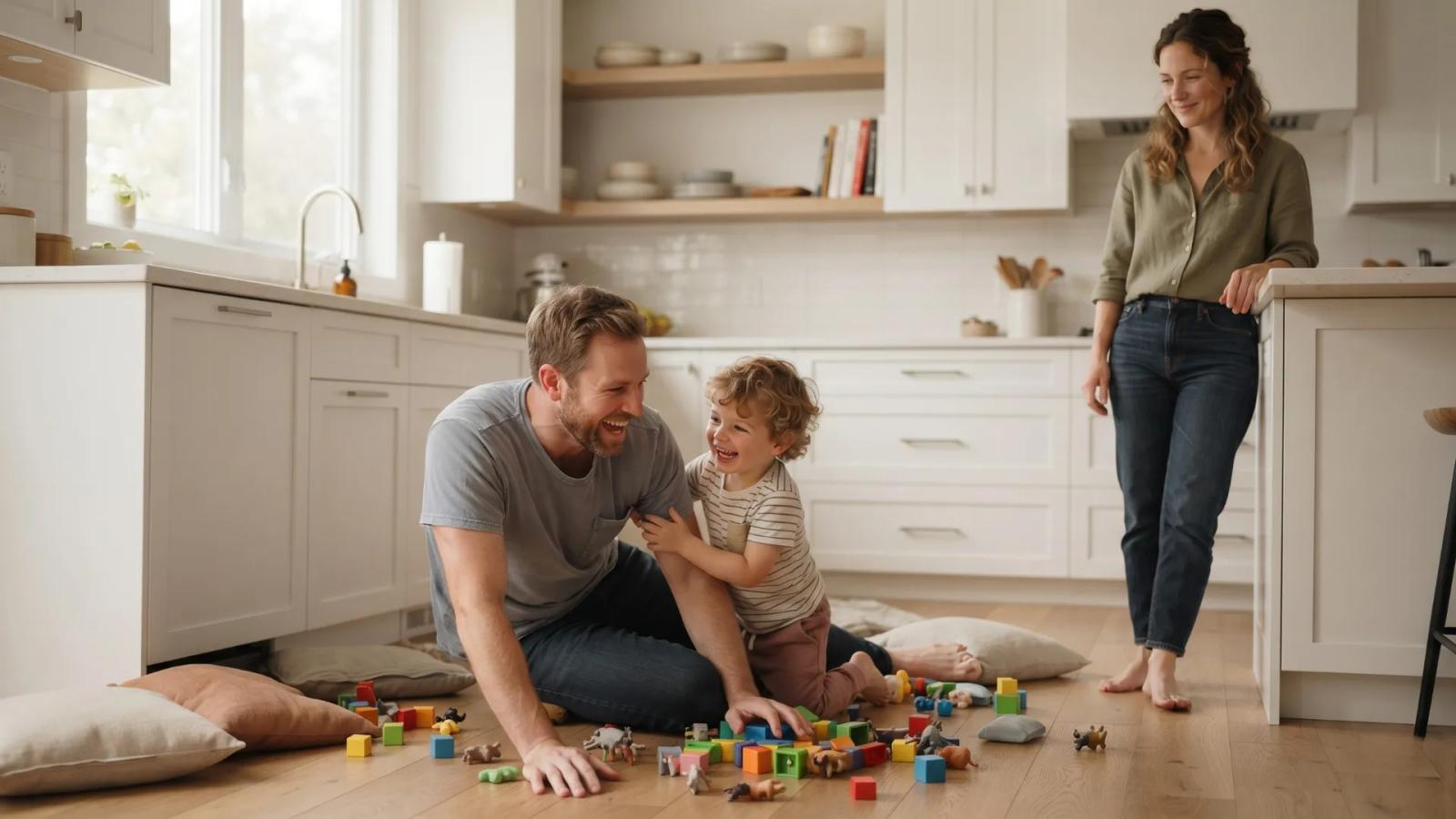
One parent is quicker to say yes, starts pillow fights, lets the kids stay up a bit later on weekends, and is usually the source of fun. The other parent keeps the schedule, enforces bedtime, says no to extra treats, and takes care of the less exciting but necessary parts of running the household.
From the outside, this can look like a reasonable division of labor. From the inside, especially from the inside of the parent who is doing most of the enforcing, it tends to feel like something else: a slow accumulation of being the bad guy in a story you didn’t choose, while watching the other parent collect affection you also want but can’t seem to access without abandoning the thing you’re holding.
This dynamic is extremely common. It’s also worth looking at directly because, left unexamined, it tends to get more entrenched over time, and the costs compound in ways that affect the children, the couple, and each parent’s relationship with their own role.
The fun parent and the strict parent are usually both doing something important. The problem isn’t the roles. The trouble starts when the roles become fixed identities that nobody chose, and nobody knows how to leave.
How the dynamic forms
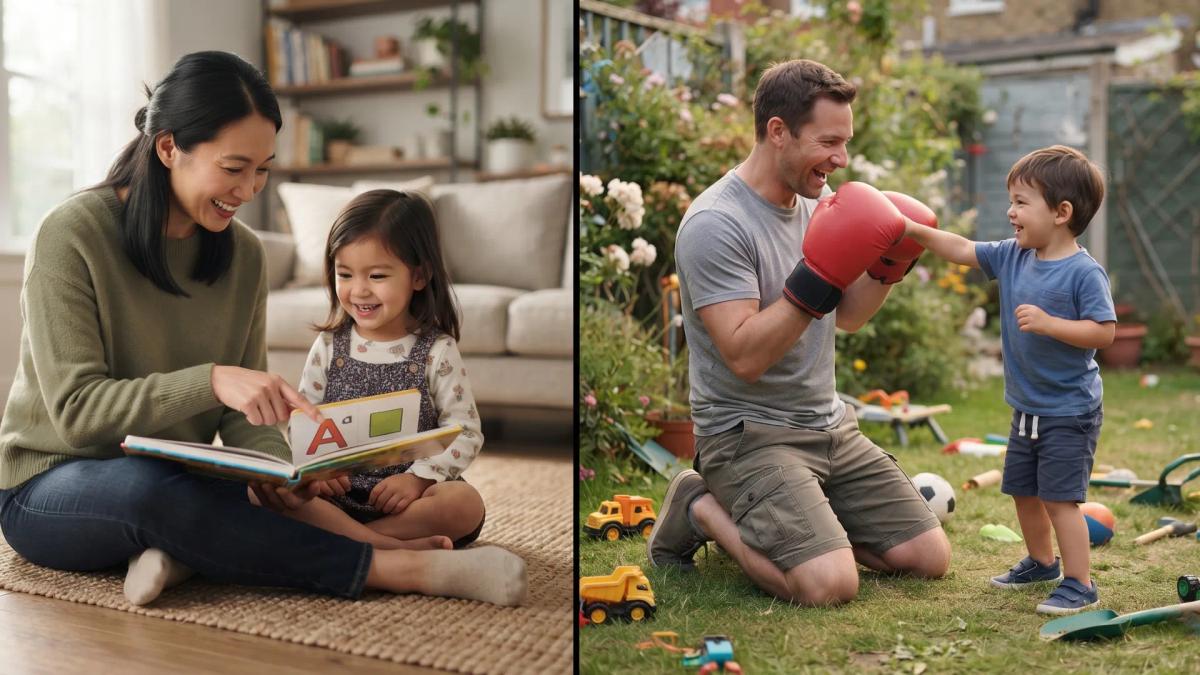
Almost nobody sits down and decides to become the fun parent or the strict one.
It happens gradually, through a series of small choices and reactions that eventually calcify into a pattern. One parent says yes more often, and the children learn to ask that parent. The other parent notices they’re being asked less for fun things and more for logistics, and either steps further into the management role, resents it, or does both. The fun parent starts to unconsciously protect their role because the children’s preference feels good, and the strict parent starts to unconsciously protect the household function because someone has to.
The dynamic also forms through genuine temperament differences. One person may naturally be more playful, more spontaneous, more willing to bend rules occasionally. The other may genuinely care more about consistency, structure, and follow-through. Neither is wrong. Both are useful. The problem isn’t the difference in temperament but what happens when that difference gets amplified by the feedback loops of parenting: the fun parent gets rewarded by the children’s enthusiasm and does more of the fun things, while the strict parent gets the harder responses and does more of the hard things, and neither trajectory naturally reverses on its own.
This dynamic usually starts as a reasonable way to adapt to differences. Over time, though, it turns into something more rigid than anyone meant. That’s not a character flaw. It’s just how patterns work when no one is steering them on purpose.
What it costs each person
The costs are different depending on which role you’re in, and both are real.
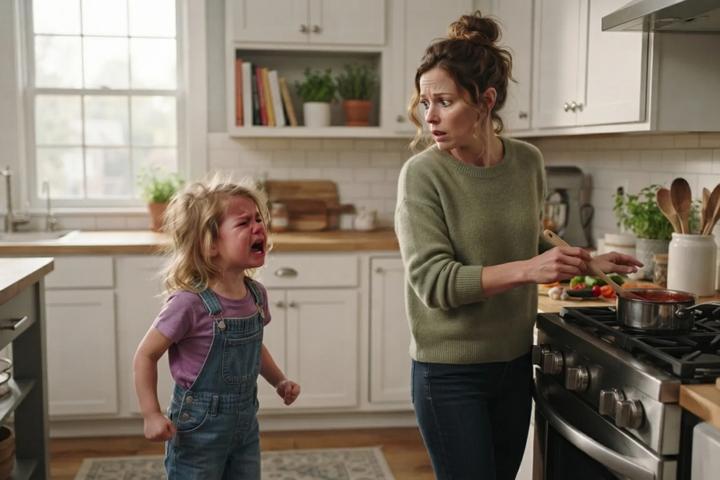
The cost to the strict parent. Being consistently the person who enforces, corrects, and holds the line is exhausting in a specific way: you’re doing necessary work and receiving the least pleasant responses for it. Over time, this produces resentment toward the other parent for not sharing the burden, a feeling of being cast as the villain in your own family, and sometimes a pulling back from warmth because the enforcing role has crowded out the space where warmth usually lives. The children learn to associate you with limits and the other parent with pleasure, which is a painful thing to be aware of and hard to shift once the association is established.
The cost to the fun parent. This one is less obvious and often unacknowledged. Being the fun parent feels good in the moment, but it comes with its own costs: the children’s affection is partly contingent on what you provide, which is a fragile kind of connection, and the relationship with your partner accumulates tension as they carry more of what you’re not carrying. There’s also the longer-term problem that a parent who has primarily been a source of fun and permissiveness hasn’t built the kind of relationship with their children that survives difficulty, disagreement, or the point when the children are old enough to need more than someone to play with.
The cost to the children. Children in this dynamic learn a version of their parents that isn’t fully accurate: one is more fun, and one is stricter, which becomes the lens through which they approach each parent. They may learn to play parents against each other, not out of manipulation but out of the perfectly rational decision to go to the source most likely to say yes. They also absorb the tension between the parents over the imbalance, even when it’s unspoken, and file it somewhere in their understanding of how adult relationships work.
The children aren’t benefiting from the dynamic as much as it might look. The fun parent’s popularity is real, but it’s also partly because of consistently lower expectations. That’s not really a gift.
The conversation that needs to happen between the adults
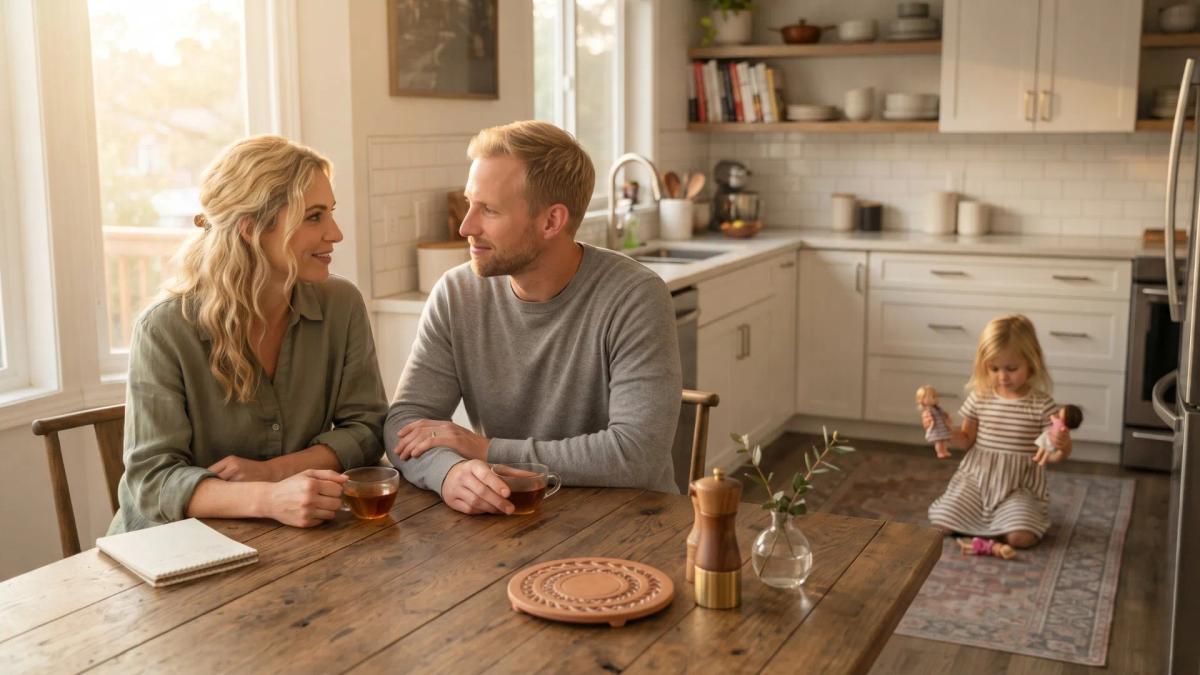
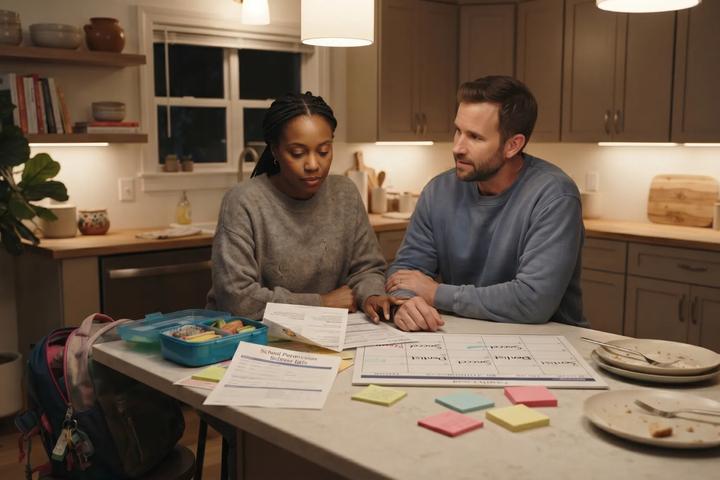
Most of the work here happens in the couple, not in the parenting.
The dynamic persists partly because it’s never been named directly, and naming it changes something. Not everything, and not immediately, but the conversation that says "I’ve noticed I’m usually the one holding the limits and you’re usually the one who gets to play, and I need that to be more shared" opens something that silence keeps closed.
A few things worth being honest about in that conversation:
- Whether the division is conscious or has just accumulated without anyone deciding.
- What each person gets from their current role, because both roles offer something, and understanding the payoff makes it easier to see why the pattern is sticky.
- What the strict parent actually needs: more backup, more acknowledgment, more visible co-enforcement, more time in the fun role themselves.
- What the fun parent is avoiding by staying in the fun role is that there’s usually something.
- What it would look like for both parents to be more whole: capable of both fun and limits, rather than specialists in one.
This conversation is harder if one partner is defensive about being labeled the fun parent, because it can be read as a complaint about something that seems positive. The frame that helps: it’s not that fun is bad. It’s that specialization in fun at the expense of the harder parts of parenting that creates an imbalance that costs everyone, including the fun parent.
The goal isn’t for both parents to be equally strict. What matters is that both parents are whole—present for the good stuff and for the tough moments, sharing both instead of splitting everything in half.
What to actually change
The shift doesn’t happen from a single conversation. It happens through consistent behavior over time.
The fun parent starts setting some limits.
This is the most important practical change and the most uncomfortable for everyone initially.
The children will resist because the fun parent saying no is unexpected and unwelcome. The fun parent may resist too, because the children’s negative response feels like a loss of something they’ve come to rely on. But a parent who only ever says yes is not actually more loved: they’re more popular in a way that is contingent on the yes, and that contingency is more fragile than the connection that comes from being fully present, limits and all.
Starting small helps: the fun parent enforces one consistent thing, regularly, without the strict parent needing to step in. Over time, the children’s model of who each parent is starts to update.
The strict parent reclaims some fun.
This one is harder than it sounds because the strict parent has often genuinely lost access to their playful side within the parenting context.
It requires stepping out of the managing role long enough to remember that being with the children can be pleasurable, not just functional. Initiating something playful, without an agenda, without it needing to fit into the schedule: a spontaneous walk, a game that wasn’t planned, saying yes to something small that the instinct was to say no to. Not abandoning the limits, but not letting the limits be the entire personality either.
Both parents back each other up visibly.
One of the things that entrenches the dynamic is when the fun parent undermines the strict parent’s calls, even subtly, with a look or a later quiet yes that reverses the no.
Visible backup changes the children’s model: when the fun parent says "your dad said no, and I agree with him," or "we’re both saying this," the strict parent’s authority stops being something the children route around. The unity isn’t just about the specific decision. It’s about what both parents communicate together about how the family works.
Name the dynamic to the children, age-appropriately
Older children, especially, can benefit from a simple acknowledgment: "I know I’m usually the one who says no to things, and I want to be more than that." Or, from the fun parent: "I’m going to start being more consistent about some rules, because that’s part of my job too."
Children don’t need a full account of the adult dynamic. They do benefit from knowing that the adults are aware of it and working on it, because it relieves them of the responsibility of navigating it.
The shift is slow. At first, the kids’ responses might be confusing because they’re adjusting a model they’ve been building for years. That’s totally normal. It’s consistency that updates the model, not any single moment.
What this is really about
At its core, the fun-parent-and-strict-parent dynamic is about wholeness.
Children benefit most from parents who can be both present for the pleasure and for the difficulty, warm and consistent, capable of play and of holding the line. Not equally all the time, not without genuine temperament differences, but in a range that doesn’t leave one parent holding everything hard and the other holding everything easy.
And the adults benefit from the same thing. A parent who has only ever been the fun one hasn’t fully inhabited the role. A parent who has only ever been the strict one has given up something real. Both are poorer versions of what they could be, and both are doing it partly because the pattern made it easier not to change.
You don’t have to be the same kind of parent. You just need to be whole enough that your kids don’t have to pick one of you to get what they need.
In the end
The fun parent and the strict parent usually both love their children deeply and are doing what they know how to do within a pattern neither of them designed.
What’s worth changing isn’t the difference in temperament but the rigidity: the way the roles have become identities that limit both people and put too much of the hard work on one person.
A little more fun from the strict parent, a little more follow-through from the fun parent, and a lot more visible unity between them: that’s not a reinvention. It’s a recalibration. And it tends to produce a family that works better for everyone in it, including the parents.
Both of you are already doing something important. The real work is making sure you’re each doing a little bit of everything, instead of one person doing all of one thing.
FAQs
What if the temperament difference is genuinely large and we really are very different kinds of parents?
Temperament differences are real and don’t need to disappear. The goal isn’t identical parenting styles but enough overlap that neither parent is carrying all of one type of interaction.
A naturally more playful parent can still consistently maintain some limits. A naturally more structured parent can still make room for spontaneous fun. The range doesn’t need to be equal. It needs to be wide enough that the children experience both parents as whole rather than as specialists.
My partner actively plays into being the fun one and doesn’t seem to see it as a problem. How do I raise this?
The frame that tends to work better than complaint is impact: not "you’re always the fun one, and I’m always the bad guy" but "when you say yes after I’ve said no, it makes my limits meaningless to the kids and puts me in a position I don’t want to be in. I need us to be more united."
If the fun parent genuinely doesn’t see the imbalance, making the invisible visible helps: tracking for a week who enforces what, who the children go to for different things, what the division of hard parenting moments actually looks like. Data is often more persuasive than feeling.
I’m the strict parent, and I’ve genuinely lost access to the playful side of myself with the kids. How do I get it back?
Start smaller than feels meaningful. A five-minute game you initiate. Saying yes to something that the instinct was to say no to, once. Sitting on the floor with them for no reason.
The playfulness doesn’t come back all at once, especially if you’ve been in the managing role for a long time. It comes back incrementally, and it tends to accelerate once the children start responding differently to you, which takes a few weeks of consistency before it shows up.
The kids openly say they prefer the other parent. How do I handle that?
With less reaction than the statement deserves, at least for the moment. "I understand" or "that’s okay, I’m still here" is more useful than either dismissing it or letting it visibly land as a wound, because both of those responses teach the child that the statement has power they should probably keep using.
What changes the preference over time is behavior, not conversation. As the dynamic shifts and you become more whole in your parenting, the preference follows. Children’s expressed preferences are remarkably responsive to who is actually showing up for them in full. That’s slow, and it’s true.