
It’s 10:45pm. The kid is finally asleep. You picked up your phone just to check messages real quick — and forty minutes later you’re still scrolling, looking at photos of a mom who woke up early, made a green smoothie, set up a sensory activity with colored pasta, filmed the whole thing in vertical video with good lighting, and still had enough energy to write a caption about being present.
You look around. There are two pairs of dirty socks on the floor, a plate with dinner leftovers on the coffee table, and a version of yourself that can’t remember the last time she washed her hair.
And then that feeling comes. It’s not anger. It’s not quite envy. It’s a kind of tiredness with yourself.
That’s the invisible weight of modern motherhood: the extra layer of inadequacy that got quietly stuck on top of everything else — slowly, gradually, by a feed that never shows the pasta on the floor.
Motherhood always had a script. Social media just put it on loop
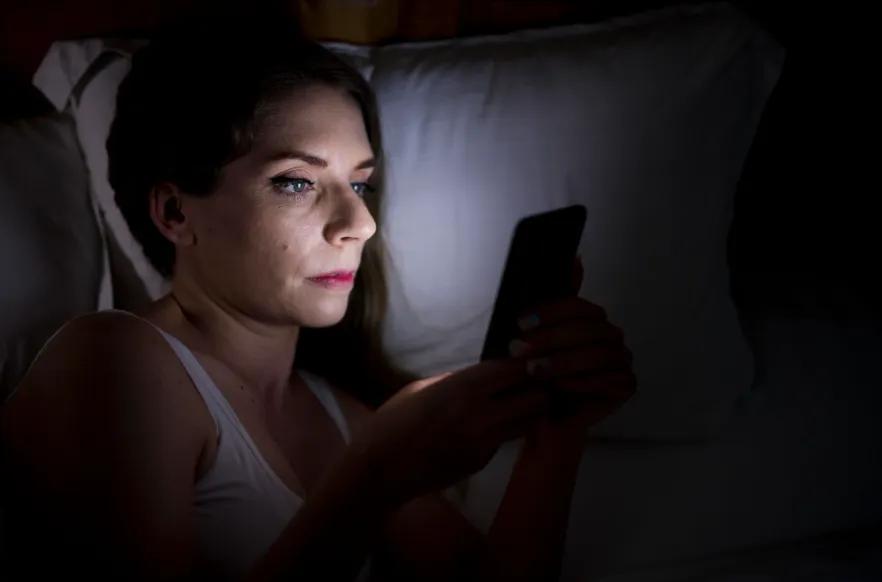
The pressure on mothers isn’t new. What changed is the speed and volume at which it arrives.
For decades, the “good mother” script was passed down through grandmothers, magazines, pediatricians, and neighbors. It came slowly, in scattered doses. You could ignore most of it.
Now it arrives in real time, with background music, quick cuts, and hashtags. Thirty times a day. While you’re in the bathroom. While you’re nursing. While you’re trying to sleep.
Instagram and TikTok didn’t invent the perfect mother. They just put her on full screen, with a filter, three times an hour, on the device you carry in your pocket.
(And the algorithm figured out that you stop scrolling longer when the content makes you feel slightly inadequate. So it sends you more of that. Thanks, algorithm.)
The result is continuous exposure to edited versions of other people’s motherhood — without context, without chaos, without the part where the sensory activity turned into a disaster and the kid had pasta in her hair for two hours.
What the feed shows. What the feed hides
It’s not that the moms who post are lying. Most of what appears on the feed is real — it happened, it was lived, it was felt.
The problem is what gets left out.
The beautiful moment got recorded.
The hour before, when the kid was unbearable and the mom was at her limit, didn’t.
The afternoon that worked became content.
The five afternoons before that didn’t work, didn’t.
You’re comparing your entire life to the highlight reel of someone else’s. It’s a structurally unfair comparison — and you lose every time, not because you’re doing less, but because you’re seeing more.
No mom posts a photo of herself crying in the bathroom while her kid bangs on the door. But every single one of them has been there.
The group chat has its own rules too
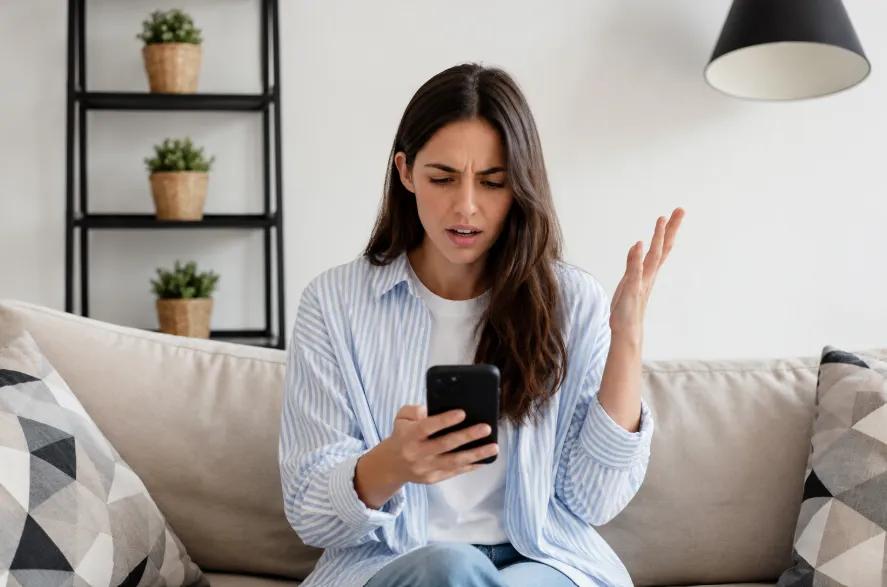
If Instagram is the stage of perfect motherhood, the mom group chat is the back hallway. More casual, more intimate — but not always safer.
In the group chat, the judgment is subtler. It comes in the form of questions.
“Are you still breastfeeding? Mine stopped needing it months ago.”
“You’re not doing preschool yet? They say early socialization makes such a difference.”
“Still in diapers? Mine was fully trained by two years and three months.”
(There’s also the silent version: you send a message saying your kid didn’t sleep all night, and someone responds with a six-minute voice note explaining the method that worked for hers. You listen to the whole thing. You try it. It doesn’t work. You never respond to the voice note.)
Most of the time it’s not malicious. It’s moms comparing moms — because that’s what they were taught to do, it’s what the environment encourages, and comparing is a crooked way of trying to figure out if they’re on the right track.
But the effect is the same: you leave the conversation feeling like your kid is behind, like you missed some important window, like there’s a manual everyone received except you.
That manual doesn’t exist. It never did.
The weight that doesn’t show up at the pediatrician
There’s a kind of exhaustion that has no name on the appointment card. It’s not postpartum depression. It’s not clinical anxiety. It’s the tiredness of constantly evaluating yourself.
Am I stimulating her enough? Am I actually present or just physically here? Is what I’m feeling normal, or is something wrong with me?
That inner voice didn’t come from nowhere. It was fed. By every video that showed a calmer mom. By every post that explained what you should be doing differently. By every thread listing the signs of secure attachment that you read at 2am with your heart racing.
Information about motherhood has never been more abundant. And it’s never been easier to turn information into guilt.
Knowing more shouldn’t make you feel worse. But sometimes that’s exactly what happens.
Real motherhood doesn’t have good lighting
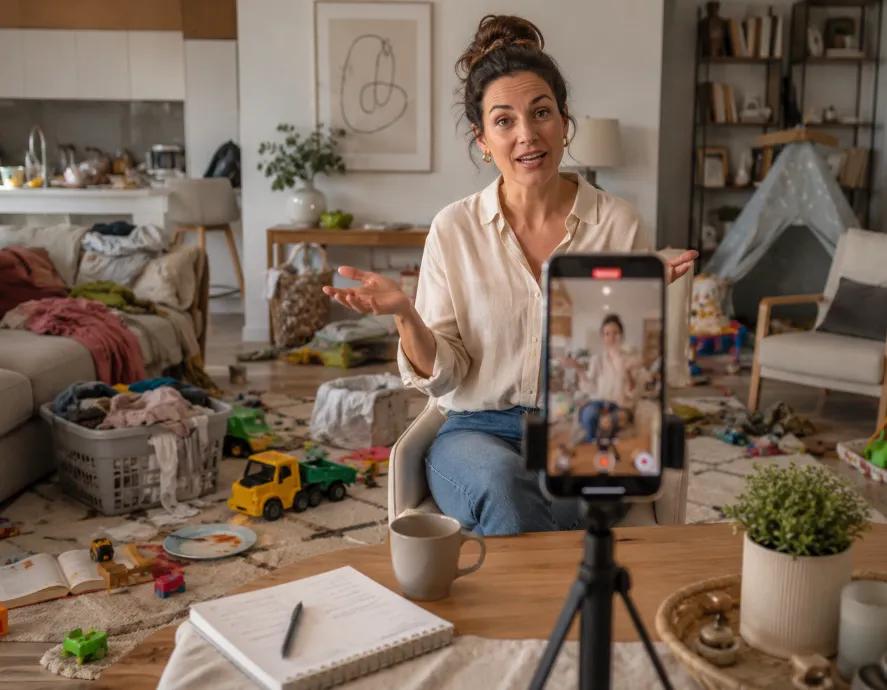
Real motherhood happens in the morning, with puffy eyes and coffee breath, trying to find the left shoe while your kid cries for a reason you still haven’t figured out.
It happens in the grocery store line with a child who has decided this is the perfect moment for an existential crisis about juice flavor.
It happens in the silence of 3am, when everything is quiet and you should be sleeping but you’re staring at the ceiling wondering if you’re doing it right.
That motherhood doesn’t make good content. It has no good angle. It doesn’t fit in 60 seconds with background music.
But it’s the only one that’s real. And it’s the one most moms are living — quietly, alone with it — while assuming they’re the only one.
What’s real doesn’t need a filter
The perfect motherhood on your feed doesn’t exist as a lifestyle. It exists as content. Those are different things.
The green smoothie mom also has days where she puts on a show and hands over the crackers just to catch her breath. She just didn’t post that day.
What defines a mother isn’t the consistency of the beautiful moments. It’s the presence in the ugly ones. The coming back after a mistake. The trying again on the day when everything pushed back.
Your child doesn’t need a perfect mother. They need a present one — and present doesn’t mean available every second, always calm, always stimulating. It means being there enough that they know they can count on you.
That doesn’t photograph well. But it’s what stays.
So the next time you close the app with that uncomfortable feeling — that nameless tiredness with yourself — remember you’re comparing your whole life to someone else’s storefront.
Storefronts are for looking. Not for living in.
You already live somewhere real. And that’s enough.
Frequently asked questions
Is it normal to feel inadequate after seeing motherhood posts?
Extremely common. Research consistently shows that passive social media use — scrolling without engaging — is associated with higher feelings of inadequacy and social comparison. The problem isn’t you. It’s the format.
How do I stop comparing myself to other moms?
There’s no off switch. But it helps to remember you never have access to the full context of anyone’s life — only what they chose to show. Actively curating your feed also makes a real difference: unfollowing accounts that make you feel smaller isn’t weakness, it’s mental hygiene.
Are mom group chats actually harmful?
It depends a lot on the group. Some offer genuine support and real solidarity. Others function as comparison chambers disguised as community. If you consistently leave conversations feeling like your kid is behind or you’re always getting it wrong, it’s worth noticing how much space that group takes up in your day.
How much screen time is okay for moms?
This question rarely gets asked — and it should be asked more. Moms are just as affected by heavy content consumption as anyone else. There’s no right number, but there’s a useful question: after you put the phone down, do you usually feel better or worse? That honest answer already tells you a lot.
What if I post motherhood content myself?
Posting isn’t the problem. The problem is when the need to appear okay starts weighing more than actually being okay. If you’ve ever felt anxious because a nice moment passed without a photo, or staged something to look spontaneous, it’s worth pausing and asking: who am I actually doing this for?