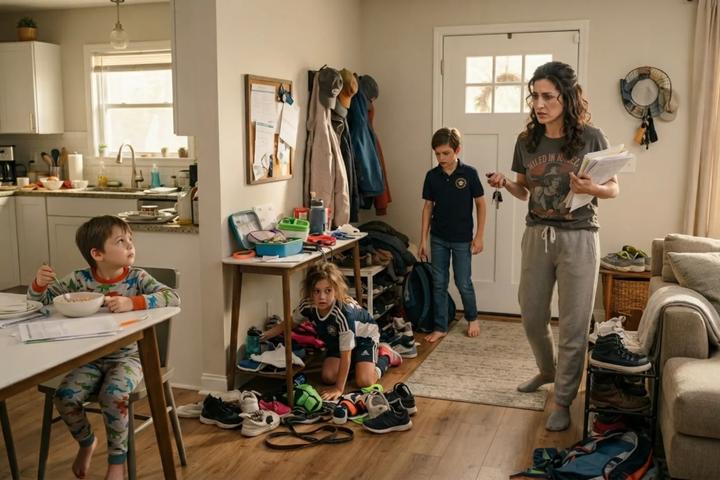
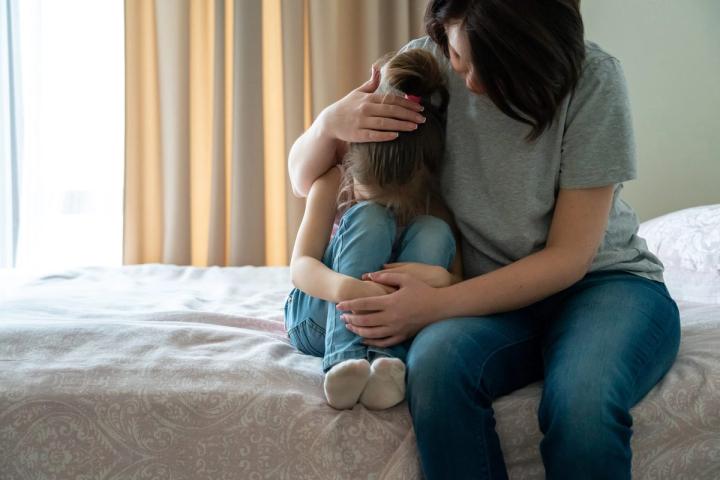
Mom and Dad were on the verge of a nervous breakdown.
After a long flight, somewhere on a questionably maintained highway between Assisi and Rome, the family car had stopped feeling like a vehicle and started feeling more like a rolling insane asylum.
Two hours in. Windows closed. Airco struggling. Heat building. Children spiraling.
Our three-year-old daughter, who had refused to sleep for the entire drive, was now screaming that she needed to sleep. Our one-and-a-half-year-old son was fighting his seatbelt like it had challenged him to a duel.
“Open! Open!”
Dad was jokingly, ok, half-jokingly, scanning the roadside for nice sturdy tree to drive the car into.
Nothing made sense anymore.
And that is usually the point where something shifts inside you.
It starts as a small, dangerous thought:
Enough. I cannot do this right now.
But you keep driving. Hands on the wheel. Jaw tight. Trying very hard not to become the worst version of yourself in front of two small people who are also completely losing it. Until you do.
Seconds before disaster
Moments like this do not explode all at once. They creep.
Your voice gets shorter. Your corrections become sharper. The air in the car fills with something heavier than noise.
And children feel that immediately. They do not step back and calmly think, our parents seem annoyed, perhaps we should lower the emotional temperature.
No.
They push harder. Not because they are trying to ruin the trip. Because they are tired, trapped, overstimulated, and they can feel that the adults are close to losing control too.
They just know that this is not okay. And they want to make sure you hear them.
Saved by absurdity
Then something strange happened.
Out of nowhere, our daughter started singing.
Well, not exactly singing. More like angrily screaming a song at max volume.
Not a normal song either. A weird, off-key, almost irritating little loop of sound. Frustration leaving her body in the only form it could find.
For a second, things could have gone either way.
That sound could have been the final straw. The moment where all the exhaustion, heat, noise, and helplessness finally erupted.
Instead, possibly because he had already been pushed halfway into insanity, Dad found himself joinging in.
He made the song more ridiculous. The words. The voice. The rhythm. Everything became bigger, stranger, and much less dignified.
For one second, the car went silent.
Then our daughter started laughing.
Not a polite little laugh. A full-body laugh. The kind that folds a child forward and breaks the tension in the room.
Our son followed almost instantly.
Then Mom started laughing too.
At first quietly. Then uncontrollably.
At the absurdity of it. At the thin line between this is unbearable and this is hilarious. At how close we had all been to the edge, and how suddenly we were not there anymore.
There were tears in their eyes. Not from frustration this time. From release.
And just like that, the car was no longer a pressure chamber. The frustration had been turned into a shared joke.
In another version of the story
There is another version of that exact same car ride.
Same children. Same exhaustion. Same highway. Same noise. Same impossible feeling of being trapped in a moving box with two tiny people who have absolutely no interest in emotional regulation.
But it ends differently.
Someone explodes.
The whole drive becomes a family memory for the wrong reason. The trip starts with a shadow over it, and next time the car ride comes up, everyone already expects the worst.
Most families have moments like that. Not because they are bad families. Because family life creates pressure, and pressure needs somewhere to go.
Sometimes it turns into yelling. Sometimes it turns into silence.
Sometimes, if you are lucky or desperate or just ridiculous enough, it turns into a song.
The story your family tells about struggle
Children do not remember most days in perfect detail. But they often remember the story told about that pivotal moment.
They remember:
- the inside joke
- the shared absurdity
- the moment everyone broke into laughter
- the feeling that we got through this together
- the strange little proof that our family can bend without breaking
That matters.
Because every family slowly builds a story about how it handles pressure.
Do we turn on each other? Do we disappear into silence? Do we make everything heavier?
Or can we sometimes, not always, but sometimes, turn the impossible moment into something we can survive together?
That day, in the car, it could have gone either way.
And somehow, our family turned exasperation into laughter.
Years from now, no one will remember exactly how bad the traffic was, how many times our son yelled “open,” or how long our daughter fought sleep tooth and nail before deciding she urgently needed it.
But someone may say:
“Remember that drive in Italy when everything was going wrong and Dad started singing like a complete idiot?”
And hopefully, someone will laugh again. Because that is how family identity is built. In the strange, messy, overheated, overtired moments where everyone is one breath away from falling apart, and somehow the family finds a way back to each other.