I spent about forty minutes on that meal.
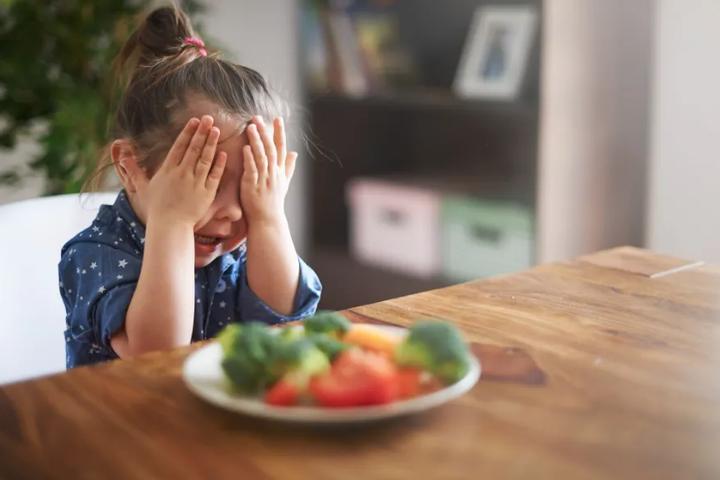
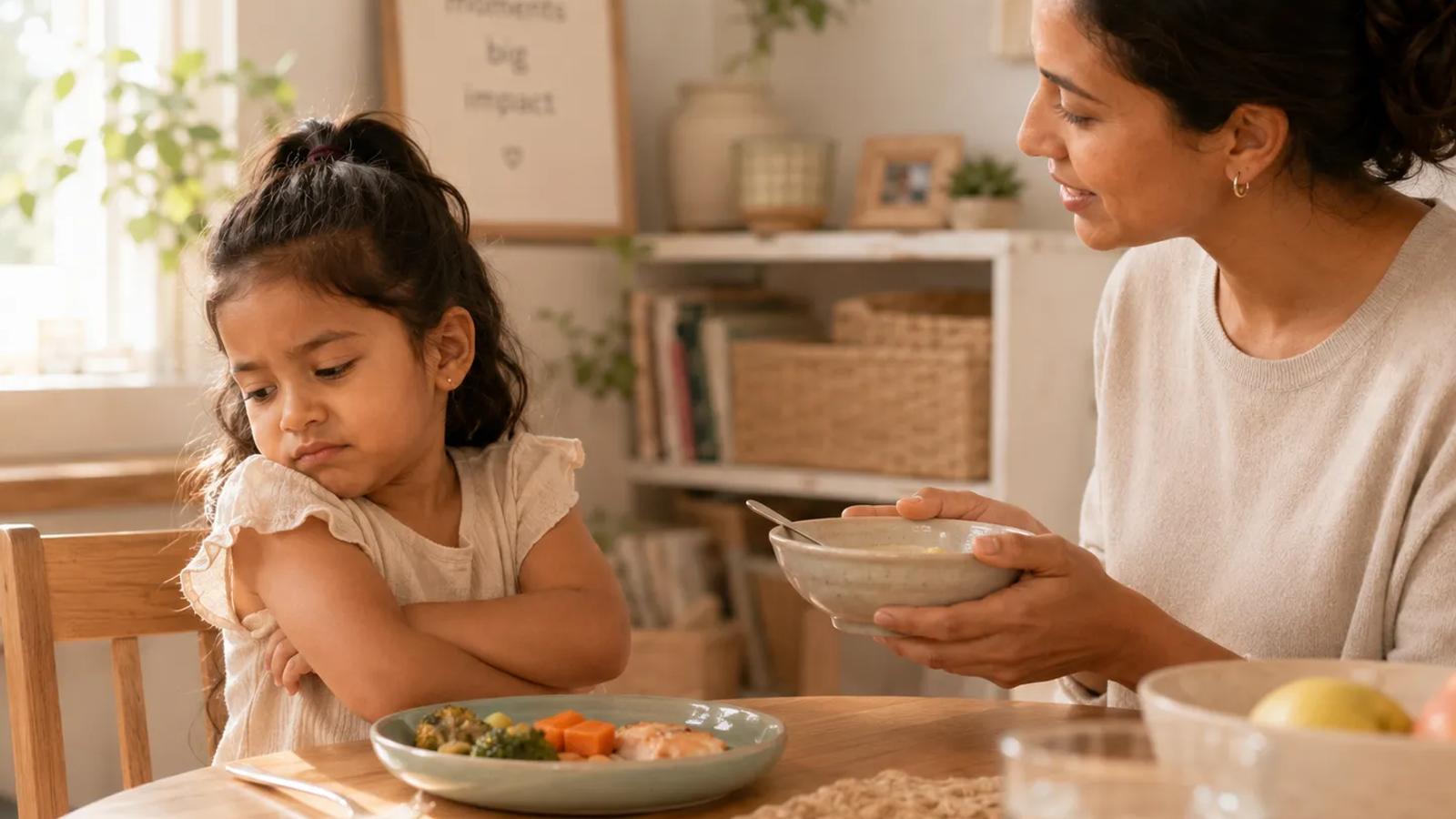
Put the plate down. He looked at it the way a food critic looks at something they’ve already decided to dismiss. And then, with complete conviction: “I don’t like it.”
He hadn’t tasted it. Hadn’t touched it. Hadn’t even really looked at it. He’d just decided.
And the worst part — the part that genuinely gets me every time — is that two days earlier, he’d eaten this exact thing and asked for more.
I didn’t yell. I negotiated. Then I pushed a little. Then I offered a deal. Then I gave up and heated up plain pasta, and we both sat there in a silence that was somehow louder than the argument would have been.
I’ve been thinking about that dinner a lot.
What’s actually happening at the table
There’s something I didn’t understand for a long time about mealtimes with a small kid: we arrive with completely different agendas.
I arrive wanting him to eat. Enough. Something nutritious. Without too much drama.
He arrives wanting to have some say in something. Anything. In a day where every single decision — when to wake up, what to wear, where to go, when to leave — was made by someone else, the plate in front of him might be the one thing he can actually refuse.
And he knows it. Not consciously, not strategically. But his body knows it.
So when those two agendas meet at the same table, the food becomes almost incidental. What’s really happening is a negotiation about control. And that’s a negotiation nobody wins cleanly.
The plain pasta problem
Every family has a version of the emergency backup meal. Ours is plain pasta.
I know a dad who makes two dinners every single night — one for the kids, one for the adults — and has done it for three years. He’s exhausted by it. But the alternative, in his house, is forty-five minutes of standoff followed by nobody eating anything.
I understand him completely.
The problem — and I say this as someone who has heated up emergency pasta more times than I’d like to admit — is that when the backup is guaranteed, there’s no real reason to try what’s on the plate. The risk has been removed. And kids are surprisingly good at calculating risk.
That’s not a criticism of anyone who does it. It’s just the thing I finally saw clearly about my own table.
What I stopped doing
I used to negotiate with dessert. “If you eat three bites of the chicken, you get dessert.”
It worked, sometimes, in the moment. But what it was teaching him — slowly, without me realizing — is that the chicken is an obstacle and the dessert is the point. Which makes the chicken worse and the dessert more charged than it ever needed to be.
I also used to comment on how much he ate. “You barely touched it.” Or the opposite: “See, you liked it!” Both put a weird weight on the quantity. Both made the meal about something other than being hungry and eating until you’re not.
I don’t think I caused lasting damage. But I do think I made the table heavier than it had to be.
A meal is an atmosphere before it’s a meal
Someone told me once: the problem isn’t what’s on the plate. It’s what’s in the room.
I’ve been testing that.
On nights when we sit down without rush, when there’s a conversation happening that has nothing to do with what he’s eating, when I’m not watching his plate with one eye — he eats more. Not always. But more often than not.
On nights when I’m tired and I arrive at the table already anticipating a fight, and he can feel that anticipation the way kids feel everything — it’s harder. Before anyone has said a word.
The emotional temperature of the room matters more than the recipe.
What I’m still figuring out
I haven’t solved this. Some nights are still a standoff. Some nights the plain pasta still gets made.
But I’ve stopped trying to win. That’s the real shift.
I put the food on the plate. I don’t comment on whether he eats it or how much. I don’t offer the backup immediately. I let the meal be what it is.
Some nights he surprises me and tries something. Some nights he doesn’t eat much and I have to sit with the low-grade anxiety of wondering if that’s fine — and it is, it always turns out to be fine.
A mom I know said something I keep coming back to: “a good meal isn’t one where he finished the plate. It’s one where we both left the table okay.”
That’s become my measure. Not what he ate. Whether we both made it through without the table becoming something neither of us wants to come back to.