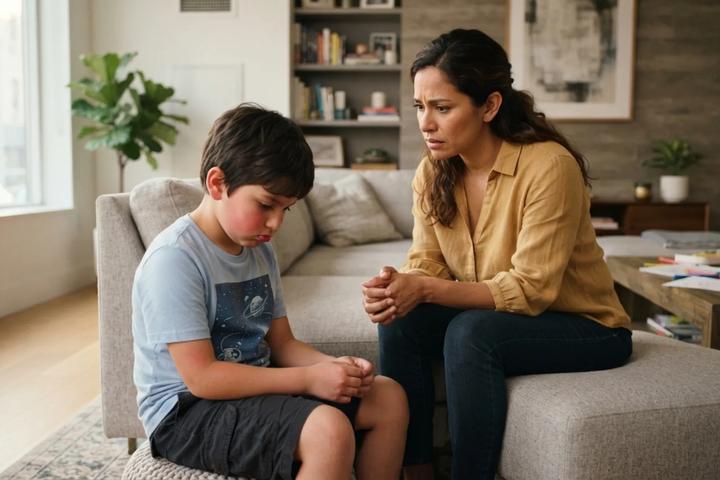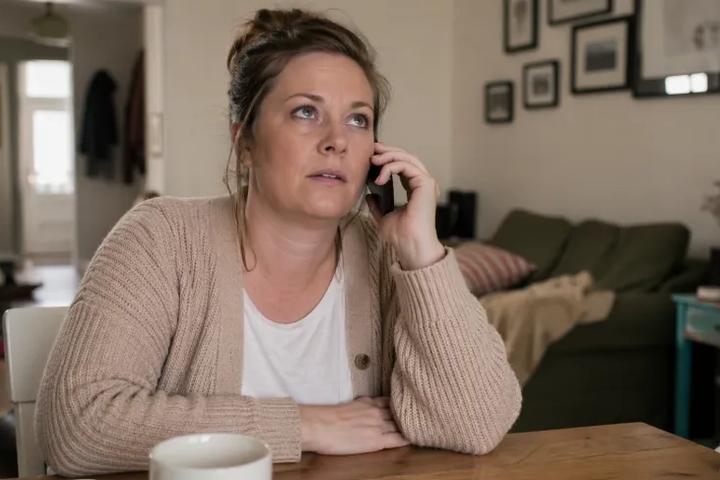
If it’s 9pm and your kid is still bouncing off the walls while you’re running on fumes, and you’ve caught yourself thinking “is this normal or am I just getting old?” — save this post.
Half-joking aside, that question is valid. And the answer, most of the time, is less alarming than it feels — but also more useful than a simple “it’s just a phase, they all do it.”
Because there’s a real difference between a high-energy child and an overstimulated one. And recognizing that difference changes a lot about what you do next.
First: movement is their job

Young children aren’t just loud, small adults. They’re organisms in the middle of full-scale motor, sensory, and cognitive development — and a huge part of that development happens through movement.
Running, jumping, climbing, pushing, throwing, knocking things over — that’s not deliberate chaos. It’s how their brain learns about their own body, about space, about cause and effect.
(The cup they knocked over for the thirteenth time? Scientific experiment. With results that are completely predictable to you and completely surprising to them.)
In the early years, the nervous system is literally organizing itself — and movement is central to that process. A child who doesn’t move is the one worth worrying about. A child who moves a lot is, most of the time, doing exactly what they should.
Energy vs. overstimulation: how to tell the difference
The difference between a high-energy child and an overstimulated one isn’t in the volume of the noise or the amount of movement. It’s in the quality of what you’re seeing.
Natural energy looks like:
- Movement with purpose — they run somewhere, climb to reach something, jump because it’s fun.
- The ability to stop, even briefly, when something catches their attention.
- Relatively stable mood through the day, with normal highs and lows.
- Tiredness that arrives predictably — and when it does, they can actually rest.
Overstimulation looks like:
- Frantic movement with no clear direction — going from one thing to another without finishing anything.
- Inability to stop even when visibly exhausted — like the body can’t find the off switch.
- Unstable mood, with fast swings between euphoria and tears — often with no obvious trigger.
- Intense resistance to bedtime, even when they’re clearly running on empty.
- Behavior that gets worse as the day goes on — especially in the late afternoon.
An overstimulated child doesn’t have too much energy. They have an overloaded nervous system — and the frantic movement is often an attempt to process that excess, not to burn it off.
(In other words: taking them to a crowded park at 6pm to “wear them out” might be exactly the worst idea of the day. You’ll come back more exhausted and they’ll be worse. Tested and confirmed by countless well-meaning parents.)
What overstimulates a child — and often goes unnoticed
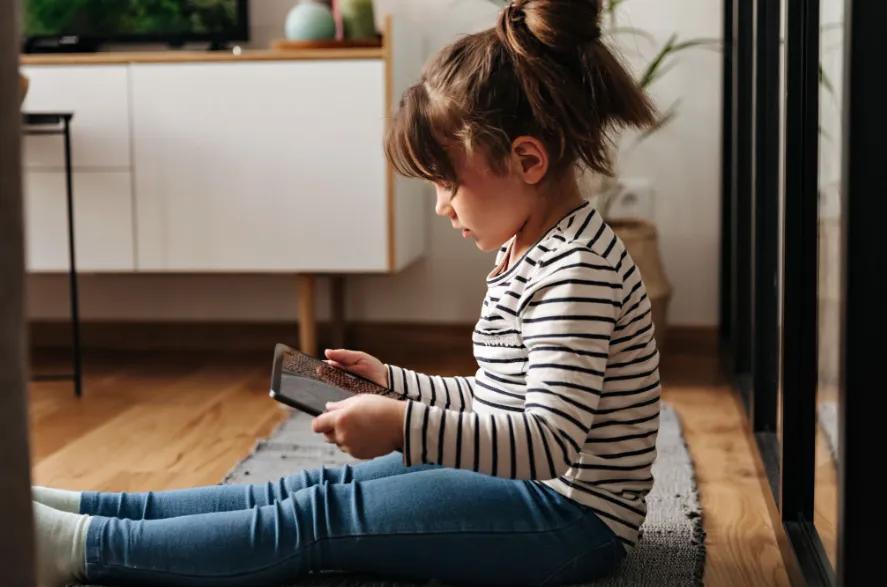
Overstimulation doesn’t only happen at amusement parks or birthday parties with a bouncy castle. It happens in daily life, in ways we rarely connect to the behavior that shows up hours later.
Screens before bed.
Fast-paced content with frequent transitions keeps the nervous system on alert. The kid who watched videos until 8pm and can’t fall asleep at 9pm isn’t resisting the routine — their brain is still processing what they watched. Think about how many videos you can scroll through in half an hour without noticing. Now imagine that volume running through a four-year-old’s nervous system.
A day that’s too full.
School, an extracurricular activity, a visit to grandma’s, the grocery store, bath, and dinner — all in the same day. For an adult it sounds like a normal Tuesday. For a young child whose nervous system is still learning to filter stimuli, it’s a lot. The chaotic behavior at the end of the day almost always has its roots in the beginning of the morning.
Loud or chaotic environments for long stretches.
A busy mall, a packed restaurant, a kids’ party with loud music. A young child’s sensory system processes all of this with far more intensity than an adult’s. They don’t “get used to it” the same way. They accumulate.
Not enough unstructured time.
A child who never gets real free time — no agenda, no screen, no adult directing what to do — doesn’t learn to regulate their own rhythm. Free play isn’t wasted time. It’s when the nervous system learns to self-organize.
(Yes, it’s possible to overstimulate a child with good activities. Music class, sports, language lessons — all great, all too much when piled on top of each other.)
The same child at different ages
What overstimulation looks like changes as the child grows — and it helps to know what to expect at each stage.
Ages 1 to 4:
The nervous system is still under construction. Tolerance for stimuli is low and the tank fills fast. (It’s a small tank. It fills up around lunchtime.)
Signs of overstimulation show up early in the day and with high intensity — tantrums that seem disproportionate, crying with no obvious cause, refusing food they normally eat. The wind-down window before bed needs to be longer than most parents plan for.
Ages 5 to 8:
The capacity for regulation improves, but the volume of stimuli goes up too — full-day school, homework, activities, more complex social life. Overstimulation at this age shows up less as frantic movement and more as irritability, easy tears, difficulty focusing, and resistance to any request by the end of the day.
(Basically: the child who spent the entire day being great at school comes home and falls apart on top of you. Which is exactly what adults do too — but that’s a post for another time.)
In both age groups, the difficult behavior at the end of the day is almost always a receipt from the beginning of the day. The problem and the cause are rarely in the same time slot.
What actually helps
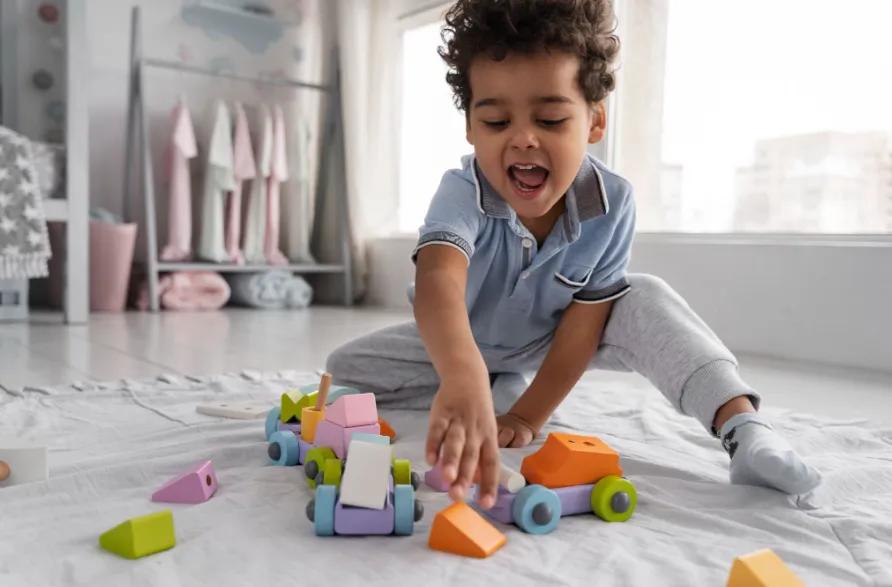
No universal formula. But there are adjustments that tend to work across age groups.
Protect unstructured time.
Free play is the main self-regulation tool a child has. Thirty minutes of free play in the late afternoon is worth more than a well-intentioned extracurricular that arrived too late in the day.
Look at the whole day, not just the hard moment.
When the behavior explodes at 6pm, the cause is probably at 10am. What happened in their day? How many transitions? How much noise? How long in high-stimulation environments?
Build transitions before big changes.
Between an intense activity and dinner, between dinner and bath, between bath and bed — small transitions at a slower pace help the nervous system decelerate before being asked to shift again. It doesn’t have to be elaborate. Five minutes of quiet, a book, some soft music.
Cut screens in the two hours before bed.
Not a myth. Also, probably, the hardest change to hold — especially on the days when you just need fifteen minutes of peace. But the type of content most kids watch keeps the nervous system on alert in a way that directly affects sleep quality and end-of-day agitation.
Purposeful movement is different from random stimulation.
Running at the park, swimming, dancing, roughhousing — intense physical movement with a clear start and end helps the nervous system organize. Movement without direction, in high-stimulation environments, tends to do the opposite.
When all is said and done
A child who never stops moving can be a lot of things. But most of the time they’re just a child — being a child, in a phase that passes.
What changes everything is observing with curiosity before acting out of worry.
Are they moving with direction or in loops? Can they stop when something catches their attention? Does the behavior get worse at certain times or in certain environments? What did their day look like before the behavior showed up?
Those questions are worth more than any rushed conclusion — and they often answer what seemed like a mystery.
Your kid probably doesn’t have a problem. They have a nervous system. And that nervous system is learning to exist in the world — with all the noise, movement, and chaos that comes with it.
Your job isn’t to calm their energy. It’s to help the environment not overwhelm the nervous system that’s still figuring out how to regulate itself.
Frequently asked questions
How do I know if it’s ADHD or just energy?
One of the most common questions — and the honest answer is that it’s not possible to know without a professional evaluation. What’s worth observing: does the behavior show up in all contexts or just some? Does it significantly interfere with learning or relationships? Does it persist regardless of how stimulating the day was? If the answer is yes to all three, it’s worth bringing up with your pediatrician.
My kid gets worse after intense physical activity. Why?
It could be accumulated overstimulation. Physical activity in a high-stimulation environment — a crowded park, a class with lots of kids, competitive sports — can overload the nervous system even when the movement itself is healthy. The transition after the activity matters as much as the activity itself.
She’s only like this at home. School says she’s calm.
More common than you’d think — and usually a good sign. It means she has the capacity to regulate her behavior in structured environments. What happens at home is that she offloads what she accumulated throughout the day in the place where she feels safe enough to do it. It’s not manipulation. It’s trust.
How much free time per day is enough?
No right number. But there’s a useful question: today, did your child have any stretch of time with no agenda, no screen, and no adult telling them what to do? If the answer is no, start there.
What if I reduce the stimulation and nothing changes?
Give it time. Changes in a child’s behavior rarely show up in one day. If after two or three weeks of consistent adjustments the pattern stays intense, it’s worth getting a professional perspective — not because something is necessarily wrong, but because an outside eye helps see what’s hard to spot from the inside.