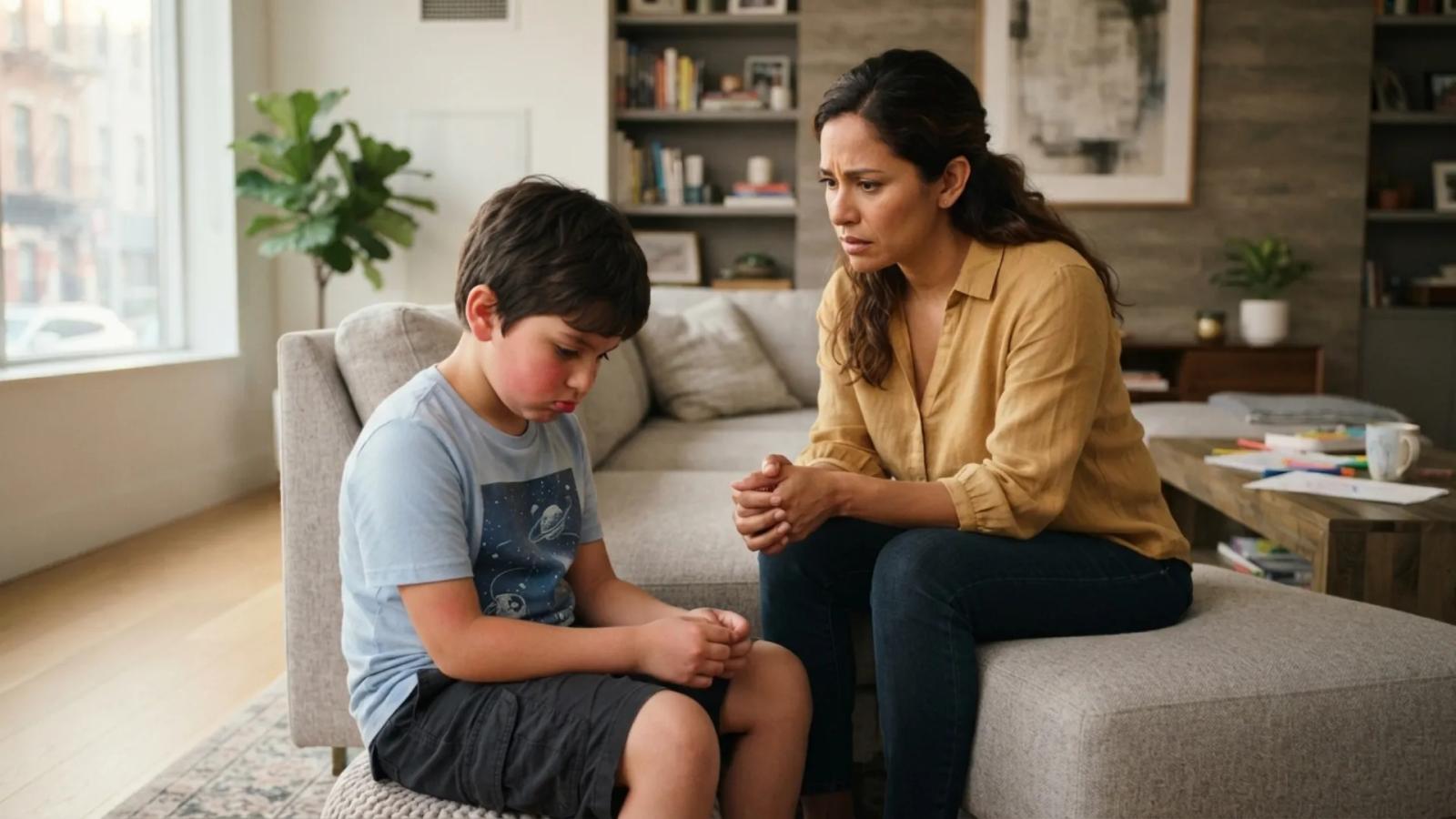
You asked if she brushed her teeth. She said yes. You found the toothbrush dry.
You asked if he finished his homework. He said yes. You found it untouched at the bottom of the bag.
Or it was something bigger: a story that didn’t add up, a version of events that changed when you asked again, a lie told with such confidence that for a moment you almost believed it.
Something tightens in you when a child lies. Not just because of the specific thing they lied about, but because of what it seems to say about them, about the relationship, about whether you can trust what they tell you.
Here’s what the research actually says: the lie is almost never what it seems. And how you respond to it matters far more than the lie itself.
(The dry toothbrush, incidentally, is universal. If yours is always wet at bedtime, congratulations. If it’s not, welcome to the vast majority of families.)
What lying actually means developmentally.
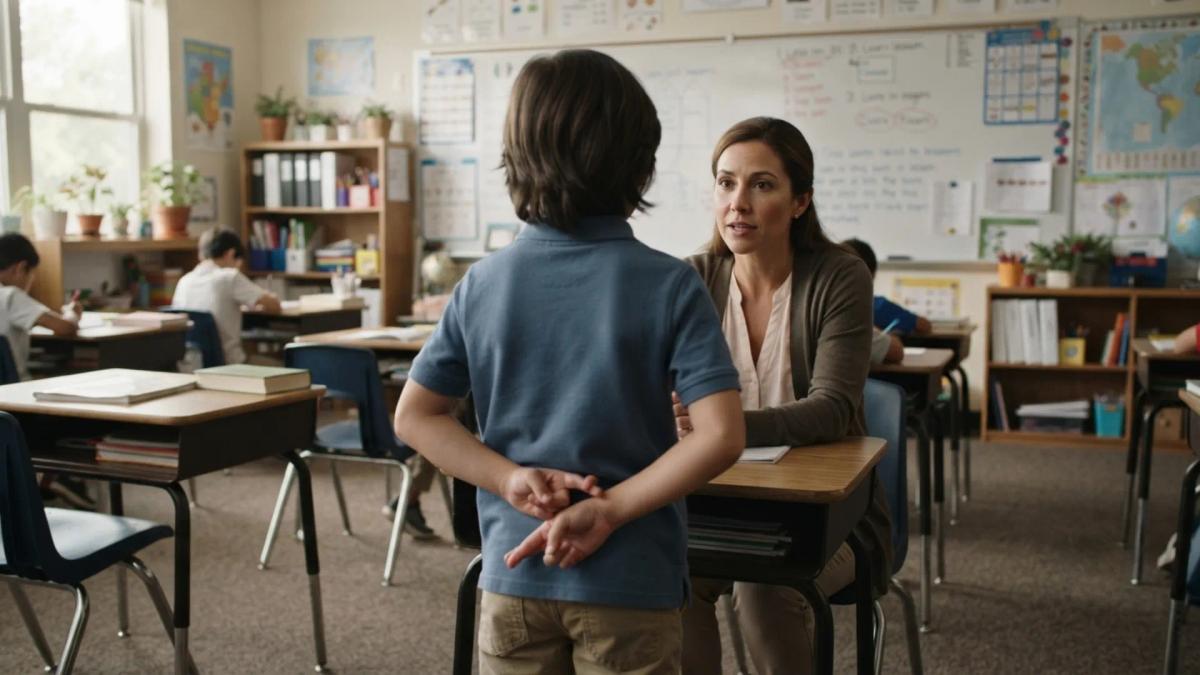
Children begin lying around ages 2 to 3, and this is considered a cognitive milestone, not a warning sign.
To tell a convincing lie, a child has to do several sophisticated things at once: understand that you don’t know what she knows, predict how you’ll respond to different versions of events, construct an alternative narrative, and deliver it without giving herself away. That’s a significant cognitive load, and the fact that she can do it at all means her theory of mind is developing on track.
Research by developmental psychologist Kang Lee found that children who lie earlier and more convincingly tend to score higher on measures of cognitive ability. This is not an argument for encouraging lying. It’s an argument against reading lying as a character defect.
The question isn’t whether your child lies. They do, and they will. The question is what they’re lying about, why, and what your response teaches them about what honesty is worth.
(A child who lies is not a dishonest child. A child who lies is a child who has learned that the truth sometimes has consequences she’d rather avoid. Which is also, if we’re being honest, what most adults have learned too.)
Why children lie
Understanding the reason behind a lie helps you respond to what’s actually happening rather than to the surface behavior. The most common reasons:
- To avoid punishment or a negative consequence.
- To protect someone’s feelings, including their own.
- To get something they want.
- To test what’s true and what’s real (especially in young children).
- To preserve privacy or autonomy, especially in older children.
- Because the truth feels too big, too shameful, or too complicated to say out loud.
To avoid punishment. This is the most common reason, and also the most structurally logical one. If the cost of honesty is high (a punishment, a reaction, a loss of something), the child’s brain calculates that lying is the lower-risk option. The higher the punishment, the stronger the incentive to lie. This is why heavy-handed consequences often produce more sophisticated lying rather than more honesty.
To protect feelings. "I love it" when she doesn’t, "everything’s fine" when it isn’t: some lies are social lubricants that children learn from watching adults. These are worth distinguishing from deceptive lies because the underlying motivation is often empathy rather than manipulation.
To get something they want. Straightforward goal-directed lying: she says she’s done her homework so she can have screen time. The lie is in service of a desire. The question worth asking is whether the desire itself is the thing to address.
To explore what’s real. Young children (two to five) often tell stories that are partly imagined and partly believed. This isn’t lying in the full cognitive sense; it’s the boundary between fantasy and reality being genuinely blurry. Treating it as deception misses what’s actually happening.
To protect autonomy. Older children and pre-teens sometimes lie not because they’ve done something wrong, but because they want a domain that’s theirs and not subject to parental review. The lie is less about the specific thing and more about the need for a private self. This is developmentally expected and warrants a different response than a lie about something genuinely important.
Because the truth is too hard. Some lies cover something the child doesn’t know how to say: shame, fear, something that happened that they don’t have words for. These are the lies worth slowing down for, because the real issue is usually underneath the lie, not the lie itself.
(The dry toothbrush lie and the lie about where she was after school are not the same thing and don’t need the same response. Knowing why helps you know what you’re actually dealing with.)
What makes children lie more

Some parenting patterns consistently increase lying, not because of bad intentions but because of how the incentive structure falls from the child’s side:
High-stakes punishment for honesty. When the consequence for telling the truth is severe, the rational calculation is to lie. Children who know that coming clean will result in a strong reaction, a long punishment, or the loss of something important will weigh the cost and often choose the lie. Reducing the cost of honesty directly increases it.
Questions that assume the answer. "You didn’t eat your vegetables, did you?" "I bet you forgot again." These questions signal that you already believe the worst, which removes the incentive to tell the truth and sometimes produces a confirming lie out of a kind of resigned compliance.
Reacting to the lie rather than the underlying thing. When the biggest consequence is for the lying itself rather than for what was lied about, children learn to be better liars rather than more honest. The skill being developed is concealment, not honesty.
A climate where mistakes aren’t safe to admit. If errors, failures, or difficult emotions consistently produce big reactions, children learn that the truth is dangerous. Honesty requires a baseline sense that the relationship can hold what’s real. When that sense is missing, lying is a reasonable self-protective strategy.
(None of this is blame. It’s pattern recognition. The good news is that patterns can change, and they tend to change faster than we expect when the incentive structure shifts.)
How to respond in a way that builds honesty
The goal isn’t to catch the lie and punish it. The goal is to make honesty consistently feel like the better option over time.
Don’t ask questions you already know the answer to
"Did you brush your teeth?" When you know the toothbrush is dry, it puts the child in a position where she has to choose between lying and incriminating herself. Instead, try stating what you know: "I noticed the toothbrush is dry. Go brush them now." No trap, no invitation to lie, no moral drama. Just the fact and the next step.
separate the lie from what was lied about
Address both, but don’t conflate them. "I’m more concerned about the homework than about the fact that you said you’d done it" is a different conversation than "lying is the worst thing here." When the lie becomes the headline, the underlying issue (the undone homework, the broken rule, the fear behind the cover-up) gets lost.
reduce the cost of telling the truth
Explicitly and repeatedly. "If you tell me what actually happened, we can figure it out together." "I’m not going to lose my mind if you tell me the truth." "I’d rather know what really happened than have you feel like you have to hide it." These statements lower the activation energy for honesty and, over time, shift the calculation.
Acknowledge when the truth was hard to tell.
"I know that was hard to say. Thank you for telling me." This is not the same as having no consequence for what was done. It’s recognizing that honesty took something, and that you noticed. A child who is thanked for hard truths is more likely to tell them again.
model honesty, including the uncomfortable kind
Children learn what honesty looks like from watching what adults do. "I said I’d be there, and I can’t make it, so I need to call and tell them that honesty has a cost and you pay it anyway. "I was wrong about that." Models that admit error are possible without collapsing. The behavior you want is the behavior they need to see practiced.
Don’t make them confess what you already know.
Forcing a child to say "I lied" when you already have the evidence isn’t pursuing honesty; it’s pursuing submission. It can feel satisfying, but it teaches the child to perform remorse rather than to feel it. Address what happened, address the impact, address what comes next. Skip the ritual confession.
(Honesty is not a character trait that some children have and others don’t. It’s a behavior that becomes more or less likely depending on what the environment makes it cost. You have more influence over that than you might think.)
When lying becomes a pattern worth paying attention to
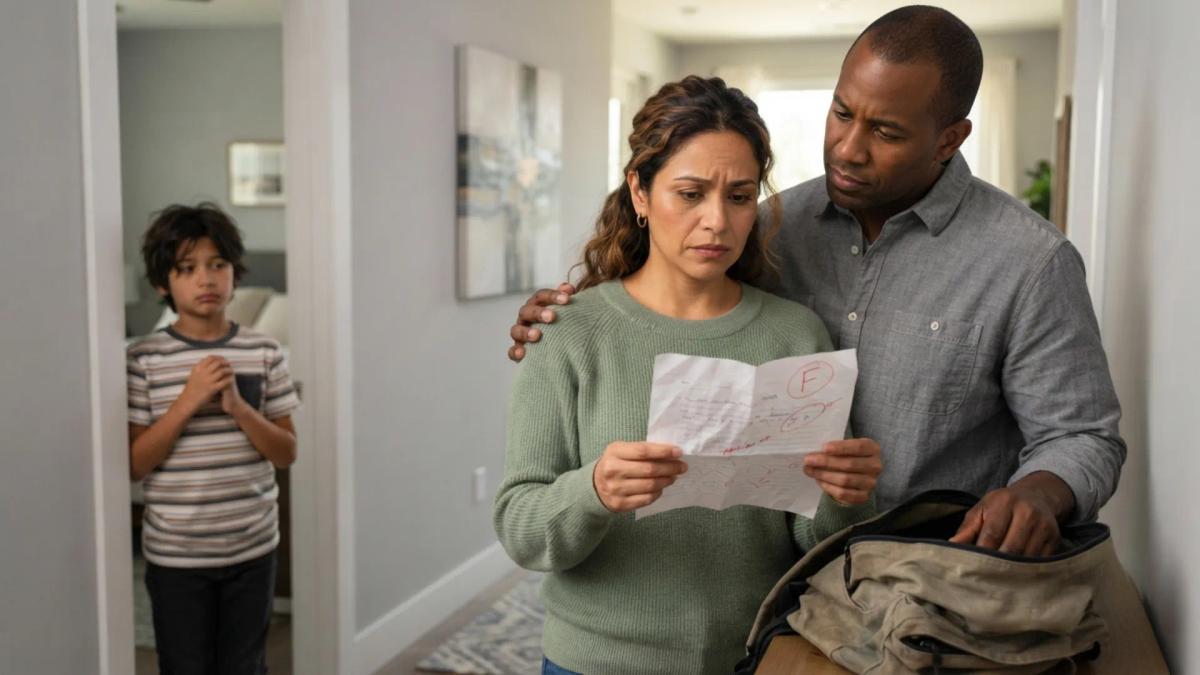
Most childhood lying is situational and decreases as trust in the relationship builds and the child develops more internal resources for managing discomfort. But some patterns are worth looking at more closely:
- Lying happens across many contexts and relationships, not just at home.
- Lying that covers significant events (something that happened at school, something with a peer, something about safety).
- Lying that seems disconnected from self-protection and closer to compulsive behavior.
- A sudden increase in lying after a period of relative honesty can signal that something has changed in the child’s world.
These aren’t automatic causes for alarm, but they’re worth a conversation with the child’s pediatrician or a child psychologist, not because lying is pathological, but because significant pattern changes sometimes point to something worth understanding.
(A child who suddenly starts lying a lot about a specific thing is often trying to protect something. The question worth asking is: what does she feel like she needs to protect, and from what?)
In the end
A child who lies is not a bad child. A child who lies is a child who is doing exactly what children do: finding ways to navigate a world where the truth sometimes feels costly, and the alternatives sometimes feel safer.
Your job isn’t to eliminate lying, which isn’t possible anyway. Your job is to build a relationship where honesty feels like the better bet, most of the time, because the relationship can hold it.
That takes time, patience, and many moments to respond to a hard truth without making the next one harder to tell.
(The child who tells you something difficult at fifteen did it partly because of how you responded to something small at seven. You don’t always see the connection in the moment. It’s there.)
FAQs
Should I tell my child I know they’re lying?
It depends on the situation. If you have clear evidence, stating it directly ("I know the homework wasn’t done") is usually more productive than asking them to confess. If you’re not sure, saying "something doesn’t quite fit for me in what you’re telling me" opens the door without accusation. Accusing without certainty tends to produce defensive doubling-down, not honesty.
My child lies even when there’s no consequence at stake. Why?
Some lying in young children is more about narrative and imagination than deception: the story they tell is the story they wish were true, or the story they’re trying on. In older children, habitual low-stakes lying sometimes reflects anxiety about how they’re perceived, a need for control over how their story is told, or simply a learned habit. Worth exploring gently what’s underneath, rather than targeting the behavior directly.
How do I respond in the moment without losing my temper?
The moment you discover a lie is rarely the right moment to address it well, because your nervous system has just been activated. If possible, give yourself a beat before responding: "I need a minute before we talk about this." The conversation that happens ten minutes later, when you’re regulated, will almost always go better than the one that happens immediately after the discovery.
At what age should I expect more consistent honesty?
Research suggests that lying peaks around ages 4 to 6, then gradually decreases through middle childhood as children develop greater internal regulation and a stronger understanding of consequences. By early adolescence, most children lie less frequently but about more significant things. The trajectory is generally toward more honesty, not less, when the relationship makes honesty feel safe enough to choose.