
These questions always seem to come at the most inconvenient times: while you’re driving, getting ready for bed, or rushing through the grocery store. They show up out of nowhere, and your child always means them sincerely.
“Do people die when they’re asleep?” “Where do babies come from?” “Why did God let grandpa get sick?” “What do you feel: a sudden jolt of panic; then your mind races: How much should I say? How do I say it? Am I going to mess this up? What if I say the wrong thing, or too much, or not enough? And why is this happening right now in the cereal aisle? And if I say too little, why is this happening now in the cereal aisle?
The good news is that your answer doesn’t have to be perfect. Expecting perfection only makes these moments harder. What your child really needs is much simpler and much more achievable than a flawless answer.
Your child asked you this question because they trust you. That trust is what matters most. The answer comes second.
Why hard questions feel so high-stakes
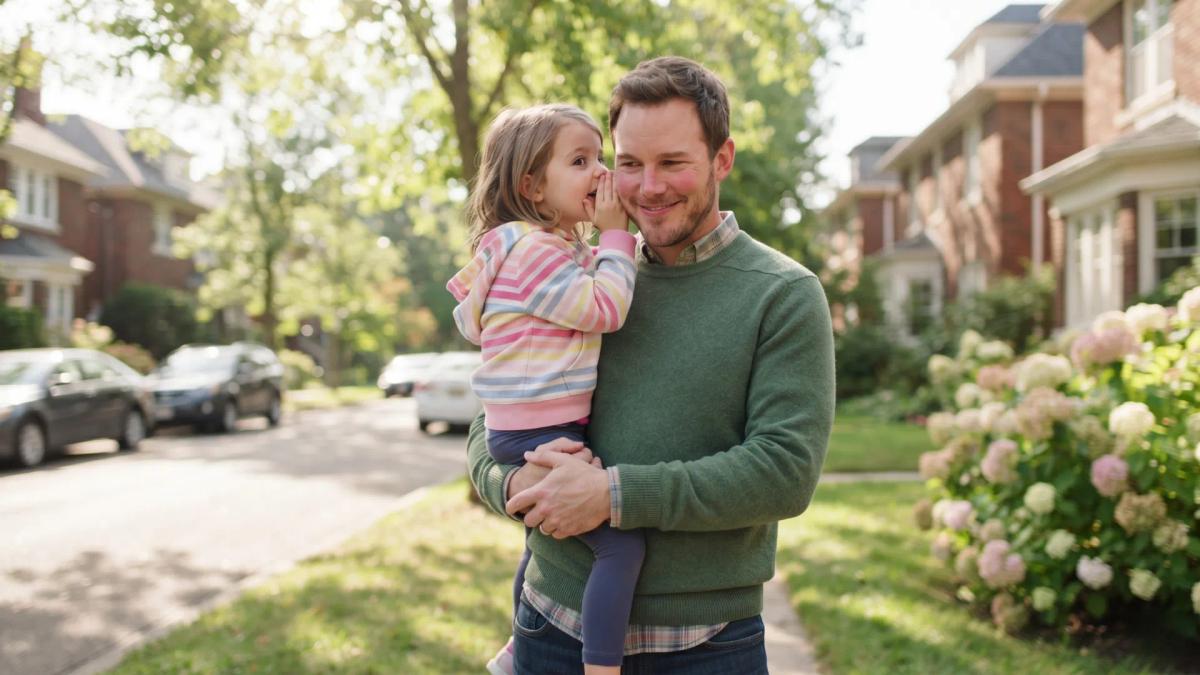
The panic that arrives with a difficult question isn’t irrational. It’s normal to panic when faced with a tough question. There are real reasons for this, and naming them can help you respond more calmly. More than necessary, or something developmentally inappropriate, or something you’ll have to walk back later, or something that contradicts what they’ll learn elsewhere. These are real concerns, and they’re worth taking seriously, though they tend to get inflated in the moment.
Some topics are just uncomfortable. Questions about death, bodies, family struggles, or big ideas like God and loss can bring up feelings you might not have fully worked through yourself. It’s hard to answer calmly when you’re still figuring things out, too.
There’s also the pressure of being the parent—the one who’s supposed to have all the answers. Not knowing what to say can make you feel unprepared or exposed, like you’re expected to know more than you do.
This isn’t a failure on your part. These questions are tough because the topics are tough. Feeling unsettled just means you care and are taking them seriously.
What the child is usually actually asking
Before you answer, take a moment to consider why your child is asking. Kids ask tough questions for many reasons, and the same question can mean different things depending on their age or the situation.
- They’ve encountered something that didn’t make sense, and they want it explained.
- They’ve heard or seen something that worried them, and they’re checking whether it’s safe.
- They’re processing something emotionally, and the question is the opening bid of that processing.
- They’re curious about the world in the abstract, without a specific concern driving it.
- They want to know what you think, not just what’s true.
Knowing why your child is asking helps you answer better. If a child asks, “Do people die in their sleep?” because they’re scared, they need comfort and information. If they’re just curious after hearing it in a movie, they need facts and maybe a chat about what they saw.
The easiest way to figure out what your child really wants to know is to ask them. Questions like “What made you think about that?” or “Is there something specific on your mind?” can help you understand what they’re really asking. Often, the real question is simpler than it first seems.
The question your child asks isn’t always the one they mean. Usually, the real question is easier to answer. Taking a moment to be curious before you respond can make things much simpler.
The principles that hold across all hard questions

No matter the topic, a few key things can help you give a helpful answer instead of making things more confusing or stressful:
Try to stay calm, or at least look calm. How you react shows your child whether it’s okay to ask these questions. If you flinch or seem upset, they might think they did something wrong. Taking a breath before you answer isn’t stalling—it helps you stay steady.
Answer the question your child actually asked, not the one you think they might ask next. Trying to explain everything at once can make things more confusing. Stick to what they asked, then pause and see if they want to know more. Let them guide the conversation.
Adjust your answer to your child’s age, not just the topic. A five-year-old and a twelve-year-old asking the same question need very different answers. For example, a young child asking where babies come from needs a simple, honest explanation, while an older child is looking for more detail. Let your child’s age guide you.
Honest uncertainty is a valid answer. “I don’t know,” “I’m not sure,” or “That’s something I’ve wondered about too” are legitimate responses to questions that don’t have clear answers. They model intellectual honesty, they avoid the specific damage of confident misinformation, and they open the door to figuring it out together, which is often more valuable than a tidy answer.
Your reaction to the question matters as much as your answer. A child who asks something hard and receives a calm, curious, engaged response learns that hard things can be brought to them. That lesson, accumulated over many questions, is more important than any single answer. The goal of responding well to a hard question is partly to answer this question and partly to make the next one more likely.
You don’t need a perfect answer. You just need to show your child that asking was not a mistake. That’s a much easier goal, and you can do it—even in the cereal aisle.
How to handle specific categories of hard questions
Questions about death
These tend to arrive earlier than parents expect and with less warning than they’d like. Children between three and seven are developmentally beginning to understand mortality, and the questions they ask are genuine attempts to understand something real and large. What tends to help: simple, honest, concrete language ("When something dies, its body stops working and it can’t come back"), acknowledgment that it’s sad and that it’s okay to feel sad about it, and openness to following their lead on how much more they want to know. What tends not to help: euphemisms ("passed away," "went to sleep") that are imprecise and sometimes frightening, and reassurances that everything will be fine when that’s not something you can actually promise.
Questions about bodies and sex
The earlier these conversations start, the less loaded they tend to be, because a five-year-old asking about bodies is genuinely curious and unembarrassed in a way that a twelve-year-old isn’t. Simple, accurate, age-appropriate answers that use real names for body parts and real descriptions of how reproduction works do significantly less damage than avoidance or misinformation. The goal at every age is that your child knows they can ask you about this, because if they can’t ask you, they’ll find the answer somewhere else, and that somewhere else is frequently less reliable and less calibrated to their actual question.
Questions about difficult family situations
Divorce, estrangement, addiction, mental illness, financial hardship: children ask about what they see, and what they see is usually more than adults realize. The principle here is honesty calibrated to age, without burdening them with more than they need to carry. “Mom and Dad aren’t happy living together, so we’re going to live in different places. That’s not because of anything you did.” That’s a complete, honest, age-appropriate answer to a question about divorce. It doesn’t require the whole story. It requires the truth at the level they can hold it.
Questions about God, meaning, and what happens after death
These are the hardest categories because the honest answer is that you don’t know, and for questions where the answer involves belief rather than fact, the most honest thing is to share your own perspective while leaving room for theirs. “Some people believe X, and I believe Y, and it’s one of the things people have wondered about forever.” That’s a real answer. It models that these questions are worth taking seriously, that adults don’t have all the answers, and that thinking about them is something you can do together.
Questions about things they’ve heard or seen that you weren’t expecting
News events, overheard conversations, things that happened at school: these questions often contain more context than they reveal. “What made you think about that?” buys you information before you commit to a response. Once you know what they actually heard or saw, you can address that specifically, correct any misinformation, and calibrate how much more to say based on what they actually need to understand. The question is almost always smaller than it sounds on first contact.
You don’t need to have a ready answer for every type of question. What matters is being willing to talk about whatever comes up, even if it’s imperfect. That’s enough.
What to do when you genuinely don’t know what to say
Sometimes the question lands, and you have nothing. No clear answer, no good framework, no settled view of your own. These moments have a few reliable moves:
- Buy yourself time honestly: “That’s a really big question. Can I think about it and come back to you?” Then actually come back.
- Wonder out loud with them questions: “I’m not sure. What do you think?” Children’s own theories about hard are often illuminating and sometimes more comforting than yours.
- Name the difficulty of the question itself: “People have been thinking about that question for a very long time, and nobody has figured it out completely.” This is sometimes more useful than an incomplete answer.
- Find out together: “I don’t know the answer to that. Let’s look it up.” For factual questions, this works beautifully. It models research, it produces an actual answer, and it makes the conversation collaborative.
- Share your own uncertainty: “I think about this sometimes, and I’m not totally sure what I believe.” This is more honest and more useful than a confident answer you don’t actually hold.
Not knowing the answer doesn’t mean you’ve failed. When you say, “I don’t know, but let’s think about it together,” you’re teaching your child something even more valuable than always having the right answer. Being willing to admit you don’t know is a kind of wisdom.
In the end
Hard questions from children are a form of trust. They’re asking because they believe you can hold it, because you’re the person they want to make sense of the world with, because whatever they’ve encountered, they want to bring it to you first.
The answer doesn’t have to be complete. It doesn’t have to resolve everything. It doesn’t have to be the thing you’ll say in exactly the same way next time. It just has to be honest, calm enough to model that the topic is survivable, and open enough that they’d ask again.
That’s actually a very achievable standard. You can do that. You already are.
When your child asks you a question instead of searching online, it’s a gift. Treat it that way.
FAQs
What if I answer and they ask a follow-up I’m not ready for?
Follow-up questions are a good sign: it means the first answer landed and opened something rather than closing it. If the follow-up catches you off guard, the same moves apply: answer what you can, be honest about what you don’t know, and take more time if you need it. The conversation can continue through multiple exchanges over days and years. It doesn’t have to resolve in a single sitting.
What if my answer conflicts with what they’ve been told at school or by other family members?
This is common, especially on topics where values and beliefs vary. The most useful framing: “Different people believe different things about this, and our family believes X.” That honors the existence of other views without undermining yours, and gives the child a framework for understanding that disagreement on big questions is normal rather than alarming. Avoid disparaging the other source, even if you disagree with what they said.
My child asked something that genuinely upset me. How do I handle my own reaction?
Name it briefly and honestly: “That question touches something that’s hard for me too.” That’s more useful than pretending you’re unaffected, and it’s more honest than hiding it. If you need a moment before responding, take it. “Let me take a breath because I want to give this a real answer” is a completely reasonable thing to say, and it models that taking care with difficult things is worth doing.
Should I always answer, or are some questions okay to redirect?
Not every question requires a full answer in the moment, and some questions are better answered with a question back (“What do you already know about that?” or “What made you think about it?”). The thing worth avoiding is the deflection that signals the topic itself is off-limits, because that teaches them not to ask. Even “That’s a big question, and I want to give it a real answer. Can we talk about it tonight when we have more time?” keeps the door open while buying time. The door should stay open.