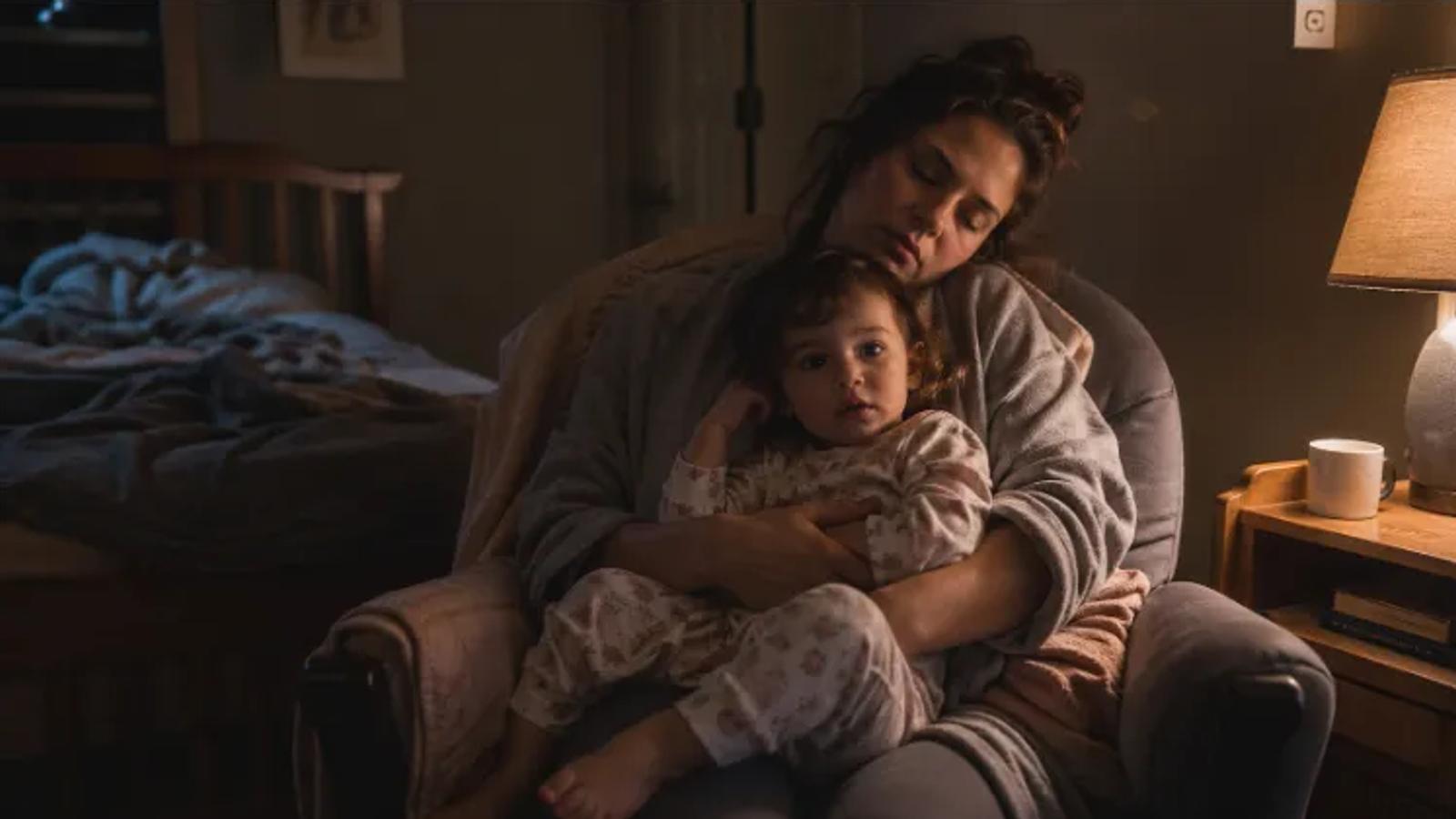
You are not alone. For most parents, exhaustion seems to be an inescapable state of existence.
Some parents go through the whole day on autopilot and only realize how tired they really are when the house finally goes quiet. Or almost quiet.
Because when the subject is children and sleep, silence does not always last very long.
There is the baby who wakes up again. The child who calls you right after you finally lie down. The one who is thirsty, wants one more story, is suddenly no longer sleepy, hears a noise, or remembers a deeply important question about dinosaurs at 11:17 p.m.
And then there is the child who does fall asleep, but keeps waking up through the night, breaking the whole night into pieces.
When that becomes a pattern, the question starts showing up: my child does not sleep well at night, what do I do?
The answer changes a lot depending on age. What is expected in a newborn is not the same at age 2, at 6, or closer to pre-adolescence. A big part of the exhaustion comes from trying to solve very different stages as if they were the same problem.
Not every sleep difficulty means something is wrong
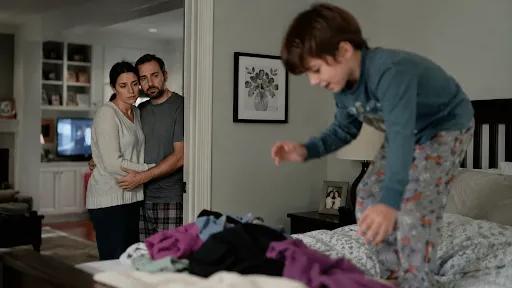
First, it helps to take one weight off your shoulders: not every child who sleeps badly has a problem, and not every exhausted parent is doing something wrong.
Children’s sleep is shaped by development, routine, food, fear, need for closeness, stimulation, school stage, autonomy, and emotional regulation. In other words, it does not take much for the night to decide it has plans of its own.
In some homes, sleep stops feeling like a basic biological function and starts feeling more like a military operation with too many steps, very little predictability, and a tiny generalwho keeps changing the rules without notice.
The night turns into a kind of shift work with very low emotional pay. You close one request at 2:00 a.m., another one opens at 3:12, and by 4:06 there is a brand-new issue no one even knew existed.
Still, looking at age and context usually helps much more than trying random tips the way someone assembles furniture at eleven-thirty at night without the manual and with the wrong screwdriver.
Newborns and young babies: when waking up is part of the package

In the first months, waking up several times during the night is usually expected. The baby is still maturing their biological rhythm, needs to feed, poops and pees constantly, feels discomfort more easily, needs physical closeness, and does not yet organize sleep the way an older child can.
At this stage, many parents search desperately for something like “my child wakes up several times” hoping for a quick solution. But with newborns, the question is not always how to make them sleep through the night. A lot of the time, it is about understanding what is compatible with this age and what already deserves a conversation with the pediatrician.
What tends to help in this phase:
- noticing signs of hunger, discomfort, and sleepiness before the baby reaches their limit
- trying to keep some predictability between light, noise, and stimulation across day and night
- avoiding too much stimulation when the baby wakes up at night, so the moment does not accidentally become “great, now the day has started”
- asking for help and sharing care whenever possible, because prolonged sleep deprivation hits the body and the mood of the adult caring for the baby
If the baby seems to be in significant pain, has strong reflux (this is often underestimated!), breathing difficulty, very intense crying, or any change that feels concerning, the best path is to talk to the pediatrician.
Up to age 2: sleep, separation, and a great deal of intensity
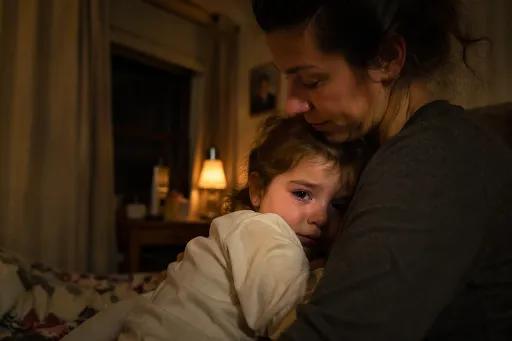
Between the end of the first year and age 2, sleep can stay unstable for many reasons. The child is growing, noticing more of the world, feeling separation more strongly, testing limits, and moving through phases of greater sensitivity.
Sometimes what wakes them is not just hunger or discomfort. It can be the need for closeness, a change in routine, a developmental leap, a dream they cannot articulate, teething, separation anxiety, or simply a day that went badly and somehow spilled into the night.
It is also a phase when many adults discover that putting a child to sleep can take on the emotional tone of an airport goodbye. You think you have reached the end, you do the final hug, adjust the blanket, leave on tiptoe, and then hear movement that communicates very clearly: where do you think YOU’RE going?
It is also the age when a child can fight sleep with astonishing conviction, as if going to bed means missing a decisive board meeting. Some nights they are visibly tired, rubbing their eyes, yawning, leaning against you, and still somehow finding the energy to disagree with the very existence of the bed.
What tends to help here:
- building a repeatable bedtime routine with few steps and very little negotiation
- keeping bedtime somewhat predictable
- reducing screens and more agitating stimulation close to the evening
- noticing whether the child is becoming overtired, because that can make falling sleep worse instead of better
- keeping the routine steady enough for it to mean something, instead of changing everything every two days
Improvement does not always come quickly. With young children, repetition usually matters more than creativity.
And in many homes, that means repeating the same sequence so many times that the adult could narrate the bedtime ritual internally like someone who has been performing the same play for months.
Up to age 6: when the night starts collecting extra stories
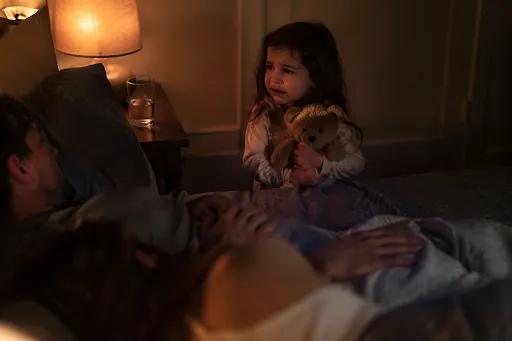
From ages 3 to 6, sleep can get tangled up with fears, imagination, night wakings, resistance at bedtime, and that impressive ability children have to remember urgent needs only after goodnight has already happened.
At this stage, the child understands much more about what is happening around them, but still does not regulate all of it very easily. The dark can feel bigger, separation can weigh more heavily in certain periods, and a tired body does not always turn into calm sleep.
When a parent starts thinking, my child does not sleep well at night, what do I do, it helps to look at a few simple questions:
- Is the end of the day too rushed?
- Is the child going to sleep too late?
- Has bedtime turned into a tug of war?
- Are there frequent fears, nightmares, or recent changes in the child’s life?
What tends to help:
- making the nighttime routine more predictable and calmer
- avoiding long power struggles around bedtime
- acknowledging fears without increasing the drama around them
- agreeing on short, clear rituals such as bath, story, and bed
- staying firm without turning every trip out of the room into a major confrontation
On many nights, the point is not to convince a child that sleep is magical. It is simply to avoid letting the entire house enter diplomatic negotiations at 9:40 p.m.
From age 7 to pre-adolescence: when sleep also starts talking to emotions

After age 7, and especially as children move closer to pre-adolescence, sleep problems can look different.
Sometimes it is no longer the child who calls for you over and over. It is the one who takes forever to fall asleep, lies there thinking too much, wakes in the middle of the night, avoids bedtime, or seems to arrive at the evening already mentally accelerated.
This is the phase when the body is clearly asking for rest, but the mind decides to open twenty tabs at once. The child lies down and suddenly remembers the test, the conversation at school, something mildly embarrassing that happened at 2:32 p.m., tomorrow’s assignment, and possibly a philosophical question that did not seem urgent until the lights went out.
At this age, sleep can reflect anxiety, too much screen time, an overstimulating routine, school worries, quieter fears, or simple difficulty slowing down.
For many parents, this stage can be confusing because the child already seems old enough to sleep well on their own, but still cannot switch off as easily as adults imagine. Then a very familiar scene begins: they say they are not sleepy, ask for five more minutes, get up for water for the third time, adjust the pillow like they are negotiating a contract, and reappear with a question that somehow only became important at 10:11 p.m.
The child will not always explain clearly what is bothering them. Sometimes it shows up in the body, in irritability, in resistance to sleep, or in that classic “I’m not sleepy” delivered with the face of someone who is sleepwalking.
And then there is that very specific moment when a parent stands in the doorway and thinks, with all the maturity the hour allows: how is it possible that this child was tired, yawning, and barely functioning all day, and has now chosen bedtime to debut a brand-new source of energy?
What tends to help:
- looking closely at what the child’s routine is like during both the day and the evening
- paying attention to screen use close to bedtime
- noticing whether anxiety, worry, or emotional overload is appearing in other parts of the day too
- keeping sleep times at least somewhat consistent
- making room for conversation without turning nighttime into an interrogation
If the difficulty lasts a long time, affects mood, school, energy, or general well-being, it may be worth seeking professional guidance.
When it is time to pay closer attention
Not every bad sleep phase means something serious is happening. But some signs deserve more careful attention:
- intense snoring or pauses in breathing
- very frequent night wakings for long periods
- extreme tiredness during the day
- persistent irritability
- major difficulty falling asleep for many weeks
- repeated physical complaints at bedtime
- regressions or abrupt changes after significant events
In those cases, it is better not to carry everything alone while trying to solve it through trial and error.
What to do when everyone is already worn out
When a child sleeps badly, it is rarely only the child who sleeps badly.
The house changes. The mood changes. Patience gets shorter. The couple feels it. The parent caring alone feels it even more. And the sense of starting every day only half-rested begins to feel less like an exception and more like the general climate.
So beyond thinking about the child’s sleep, it also helps to look at what is holding up the adults. Who is getting any rest at all? Who is carrying more of the night? What can be reorganized? What has already gone past the point of manageability?
There is not always an immediate solution. But there is a difference between living through a hard phase while understanding what is happening and living through the same phase while believing you have failed because your child does not sleep the way they are supposedly meant to.
Sometimes the first useful adjustment is not finding the perfect technique. It is stopping the comparison between different realities and starting to look at age, context, and what this specific child can actually handle right now.
FAQ
1. My child does not sleep well at night. What should I do first?
The first step is to observe the child’s age, routine, night wakings, bedtime, and emotional context. Not every sleep difficulty has the same cause, and that changes what may help.
2. My child wakes up several times during the night. Is that normal?
It depends on the child’s age. In newborns and very young babies, that is often expected. In older children, frequent night wakings can be linked to routine, fears, anxiety, too much stimulation, or other factors worth observing more closely.
3. Does a sleep routine really help?
Yes, especially for younger children. A predictable routine helps the body and mind understand that the day is slowing down.
4. Do screens affect children’s sleep?
In many cases, yes. Too much screen time close to bedtime can leave the child more activated and make it harder to fall asleep.
6. Is it ok to take turns sleeping?
Absolutely! Sometimes, you just need a rest. Some couples take shifts sleeping. They split the night in half. Or they each take a different night. So at least half the time, you get the sleep you urgently need. There often is no point to both lose sleep at the same time. Other couples who notice their child sleeps better the first half of the night go to bed very early to at least catch a few hours of uninterrupted sleep.Whatever works for you to keep your sanity until a structural solution has been found!.
6. When should I seek professional help?
When sleep difficulties go on for a long time, significantly affect the child’s daily life, or come with signs such as loud snoring, breathing pauses, intense irritability, extreme tiredness, or frequent distress around bedtime.