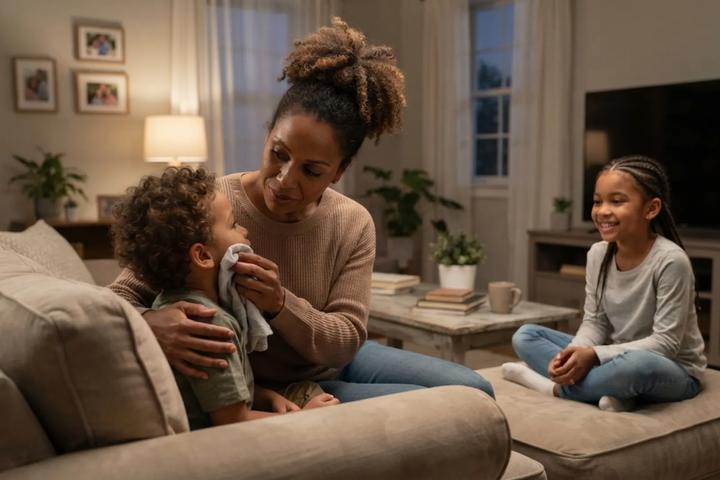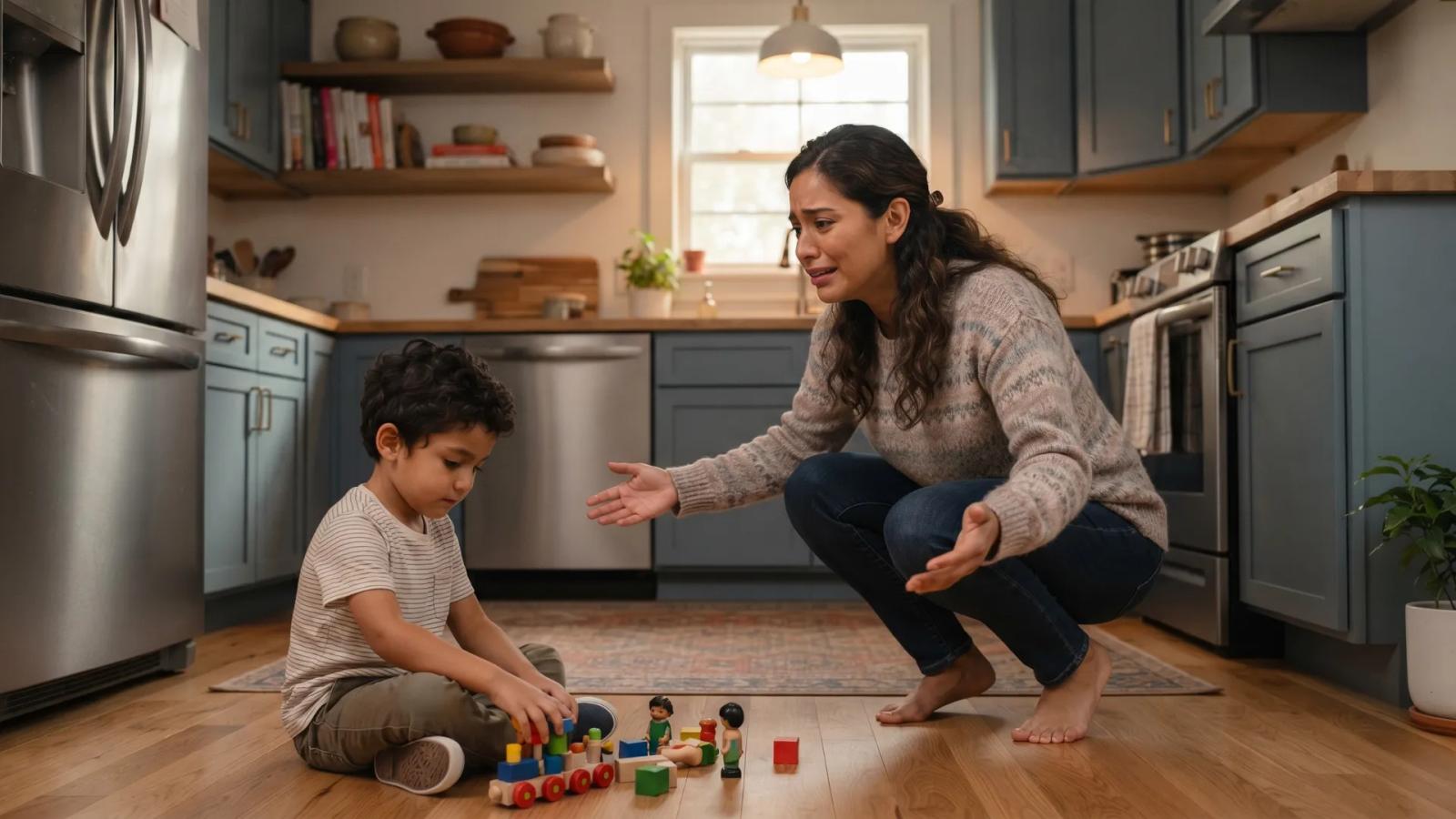
Maybe you lost your temper and spoke too sharply, or reacted too quickly and set a consequence that now feels too harsh. Sometimes it’s something smaller, like being distracted when your child needed you, forgetting something important to them, or brushing off something you should have taken seriously.
You realize you need to apologize. You sit down and begin: “I’m sorry I got so upset earlier. I’ve just been really stressed with work, and I know that’s not your fault, and I was tired because I didn’t sleep well, and I shouldn’t have reacted that way, but you have to understand that when you do that thing it makes it really hard for me to stay calm, and I was trying to...”
At some point, the apology turns into something else. It becomes a negotiation or an attempt to explain yourself. Now, your child is managing your stress and listening to your reasons, instead of simply receiving your apology. They stop being the person you’re apologizing to and become the audience for your explanations.
This is a common way a good intention gets lost. Wanting to apologize is right, but the way it’s done can hide that intention.
(Apologizing to your child is one of the most useful things you can do. Over-explaining the apology is one of the most effective ways to undo it. The gap between the two is smaller than it looks.)
Why apologies get complicated
Saying sorry to a child can feel much more uncomfortable than apologizing to another adult. This discomfort is important to recognize because it often leads to mistakes.
There’s also the question of authority. Parents are expected to know better, set the example, and be in control. Admitting you made a mistake can feel like it weakens your role, even though it doesn’t. That fear is real and often leads parents to explain or justify their actions, trying to show they’re still competent while admitting a mistake.
Guilt plays a part too. When parents feel bad, they often want their child to know how sorry they are and to be reassured that everything is okay. But this is really about the parent’s feelings. When this comes through in the apology, the child ends up trying to make the parent feel better, instead of just receiving the apology. This role reversal doesn’t help anyone.
There’s also the habit of justifying. Adults often explain when they apologize to each other, because context can help. But with children, explanations usually don’t help. What kids need from an apology is different from what explanations offer.
(The over-explained apology is almost always solving the parent’s discomfort, not the child’s. The question worth asking before you start is: whose needs am I trying to meet right now?)
What a real apology to a child actually does
A good apology to a child does a few important things, and none of them need to be long or complicated:
- It names what happened, specifically enough that the child knows you know what you’re apologizing for.
- It acknowledges the impact on the child, not just the mistake itself.
- It takes responsibility without immediately deflecting it onto circumstances or the child’s behavior.
- It restores the sense that the relationship is intact and that the adult is still a safe person.
- It models what a real apology looks like, which is something children are simultaneously learning to do themselves.
Notice what’s missing from that list: explanations for what happened, reassurance that this isn’t your usual behavior, details about your stress, or anything about what the child did to contribute. These things might matter in other talks, but they don’t belong in the apology itself.
(An apology is one thing. A conversation about what led to the situation is another. They can both happen. They work better when they happen separately, in that order, with some space between them.)
What over-explaining actually communicates.
It helps to be clear about what a child hears when an apology is full of explanations, because it often has the opposite effect of what you want:
Explanations shift the focus from your child to you. As soon as you start talking about your stress or your situation, the conversation moves away from what happened to your child and toward your own experience. Now, they’re listening to you instead of feeling heard. The apology, if it happened at all, is already fading.
Adding context can make the apology feel conditional. For example, saying "I’m sorry I snapped, but I’ve been really stressed" includes a but. Apologies with buts are conditional: I’m sorry, but here’s why it happened. Even if you think you’ve moved on, your child still hears that condition.
When a parent talks a lot about how bad they feel, the child often tries to make them feel better. While this comes from a caring place, it creates a problem: now the child is comforting the adult who hurt them. Kids notice this role reversal, even if they can’t put it into words.
A long apology suggests that your child needs to respond in a certain way. It expects forgiveness, understanding, or at least some acknowledgment. A short, clear apology doesn’t ask for anything. It lets your child choose how to respond, which is more respectful and more likely to help repair the relationship.
(The apology that goes on longest is rarely the one that lands hardest. The one that lands is usually the one that said the thing clearly and then stopped.)
What a short, effective apology looks like
The structure is simpler than it feels:
Name what happened
Be specific so your child knows you’re not apologizing for something vague, but for the real action. Saying “I’m sorry I raised my voice at you” is better than “I’m sorry if I upset you.” Being specific shows you understand what you did, which makes the apology feel genuine.
Name the impact, briefly.
Saying “That wasn’t fair to you” or “You didn’t deserve that” focuses on your child’s experience, not your own feelings. This is what really lets your child know you see how they felt, which is the main purpose of the apology.
Take clear responsibility
Don’t add a but, context, or mention what your child did. Just say, “I was wrong to do that.” That’s it. If you need to talk more about what happened, do it later, after the apology has been given and both of you are calmer.
Stop
This is often the hardest part. Once you’ve apologized, you don’t need to add more explanation or reassurance. Just let your child take it in and decide how to respond. Some kids will say “it’s okay” right away, some will be quiet, and some might want to talk about how they felt. All of these reactions are fine, but they only happen if you stop talking first.
(The silence after a clean apology is not a problem to be filled. It’s the apology doing its work. Let it.)
The part about modeling

There’s something else to remember every time you apologize to your child: they’re paying attention to how you do it.
When children see adults apologize clearly and simply, without too much explanation or guilt, they learn what a real apology looks like. They see that adults can admit mistakes, that mistakes don’t end relationships, and that you can say you were wrong without losing respect. These are important lessons they’ll use throughout their lives.
On the other hand, when children see adults apologize by explaining or making it about themselves, they learn that an apology is really just a defense. This is a much less helpful example.
An apology isn’t just about fixing things. It’s also a lesson. The clearer and simpler it is, the better your child will learn from it.
(You’re not just apologizing for this thing. You’re showing them what accountability looks like in a person who loves them. That’s worth getting right.)
What to do with the rest of it
You don’t have to ignore the explanation you left out of the apology. You can talk about it later, in a separate conversation, after you’ve made things right.
If you need to talk about what led to the situation—like a pattern you want to change or something your child should know about how adults work—have that conversation after the apology has been accepted and things have calmed down. It’s better to start from a repaired relationship than to try to fix and explain everything at once.
Some explanations don’t need to be shared at all. Your child doesn’t need to know about your work stress or your lack of sleep. They don’t need to understand every detail of what happened. What matters is that you saw what happened, admit it was wrong, and show them you’re still their safe person. The rest is for you to handle.
(Not everything that’s true about why something happened needs to be said. The apology is for them. The processing is for you, and it belongs somewhere that isn’t inside their ears.)
In the end
Saying sorry to your child is a sign of respect. It shows them their feelings matter, that you’re willing to take responsibility, and that your relationship can handle mistakes and repairs without lasting harm.
Apologies work best when they’re short, specific, and clear. This isn’t just about being brief—it’s because what your child needs from an apology is simple, and keeping it simple helps more than adding extra details.
Say what happened. Name how it affected your child. Take responsibility. Then stop. That’s the whole apology. Everything else can come later.
(They don’t need you to be perfect. They need you to know when you weren’t and to say so clearly. That’s actually one of the best things you can do for them.)
FAQs
What if my child doesn’t accept the apology?
Let that be okay. An apology isn’t a deal that needs the other person’s acceptance to be finished. If your child isn’t ready to forgive, needs time, or wants to talk about how it felt, that’s a normal response to being hurt. You can say, “I understand, and I’m still sorry,” and leave it at that. If you push for acceptance or show you’re upset they haven’t forgiven you, you’re asking them to manage your feelings again—which is what you want to avoid.
Should I ask if they forgive me?
Usually, you shouldn’t ask for forgiveness, at least not during the apology. Asking puts the focus on your need for closure and makes your child feel like they have to give or withhold something. It’s better to say what you’re sorry for and let the healing happen naturally as you reconnect. If forgiveness comes, you’ll notice it—you don’t need to hear it out loud.
What if what I did was actually partly their fault?
In that case, you need two conversations. First, apologize and take responsibility for your part, without mentioning what your child did. Later, have a separate talk about their behavior. Mixing both turns the apology into a negotiation and makes accountability feel like a trade. Kids can tell when an apology has strings attached. The straightforward version is the one that works.
Is there a wrong time to apologize?
Trying to apologize in the middle of a meltdown, when neither of you is calm, usually isn’t the best idea. An apology needs enough calm to be heard, and an upset child can’t really take it in. Waiting until things have settled—even if it’s an hour later or the next day—leads to a more genuine conversation. The apology doesn’t have to be immediate. It just needs to be real.