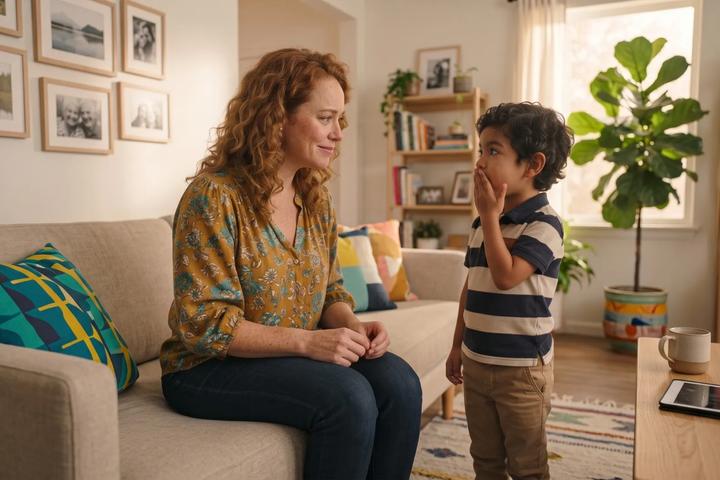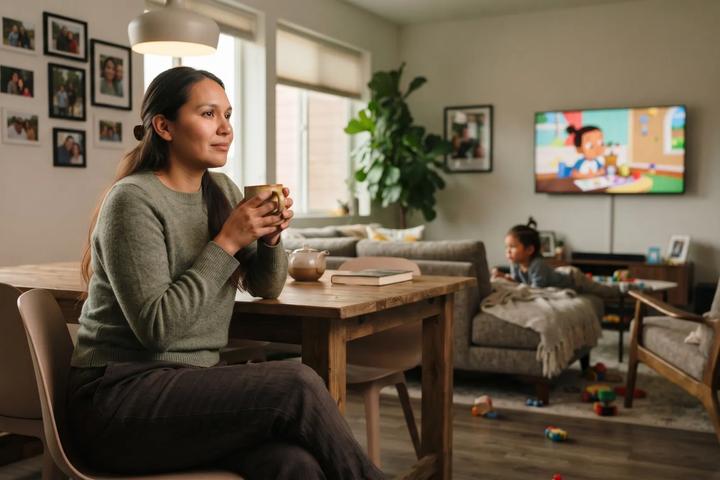
You picked her up from school, and the first thing out of her mouth was a complaint.
Or you walked through the door after work,k and everyone needed something from you before you’d even put down your bag.
Or the transition just happened the way it always does: rushed, loud, a little chaotic, and suddenly you were already in the middle of dinner without ever really arriving.
The moment of reconnection after hours apart is one of the most important moments in the parent-child relationship. It can reassure parents that these brief moments truly matter, reinforcing their role in nurturing bonds. And also one of the easiest to let slip by.
It doesn’t take much time. But it does take something.
Why the first five minutes matter more than the rest of the night

Researchers who study attachment talk about the “reunion effect”: the idea that how two people come back together after a separation sets the emotional tone for everything that follows.
Think about what happens in your own body when you reunite with someone you love after a hard day, and that person is genuinely happy to see you. Something releases. Something settles. You didn’t need a long conversation; you needed that moment.
Children feel this even more acutely. After hours of holding it together at school, managing friendships, following rules, and keeping emotions in check, they come home carrying everything they didn’t get to process.
The first minutes of reunion are when they start to let that weight go.
If those minutes are rushed, distracted, or emotionally empty, the window doesn’t close; it narrows. She might still tell you about her day later. Or she might have already decided, somewhere below conscious thought, that now isn’t a good time.
(The window didn’t close. But it’s smaller than it was five minutes ago.)
What “reconnecting” actually looks like — and what it doesn’t
Reconnecting is not this: a perfect, present, phone-free evening of total, undivided attention. That’s not realistic. And it’s not what children need most, either.
What they need is a signal. A clear, felt moment that says: I see you. I’m back. We’re together now.
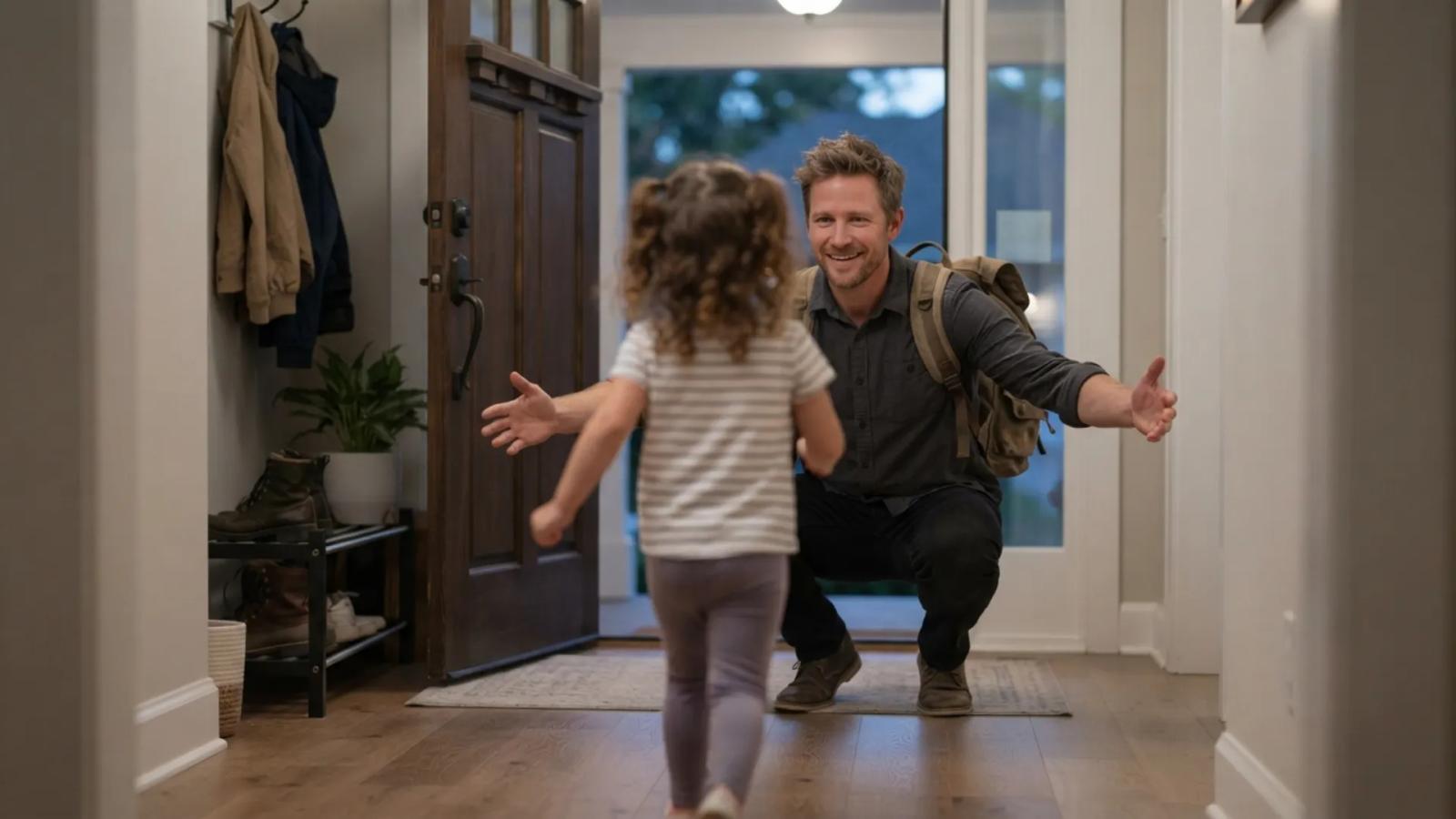
That signal can be surprisingly small. For example, a full-stop, I ’m-here hug at the door, or asking a real question while sitting next to her on the couch for three minutes before dinner, helps create meaningful rituals that reinforce connection.
The form matters less than the quality of presence inside it.
(You’re not trying to erase the day. You’re trying to build a small bridge between the day and right now. Bridges don’t need to be long — they just need to connect.)
The transition problem nobody talks about
Most parenting conversations focus on what happens once a connection has been established: how to talk, how to listen, how to set limits with empathy.
Far less focus goes to the moment just before all of that: the transition itself.
Transitions are hard for children neurologically. Moving from one context to another, school to home, a friend’s house to the car, an activity to dinner, requires the brain to shift gears, and that shift takes time and costs moments.
That’s why so many meltdowns happen right at pickup, when you walk through the door, at the end of a birthday party.
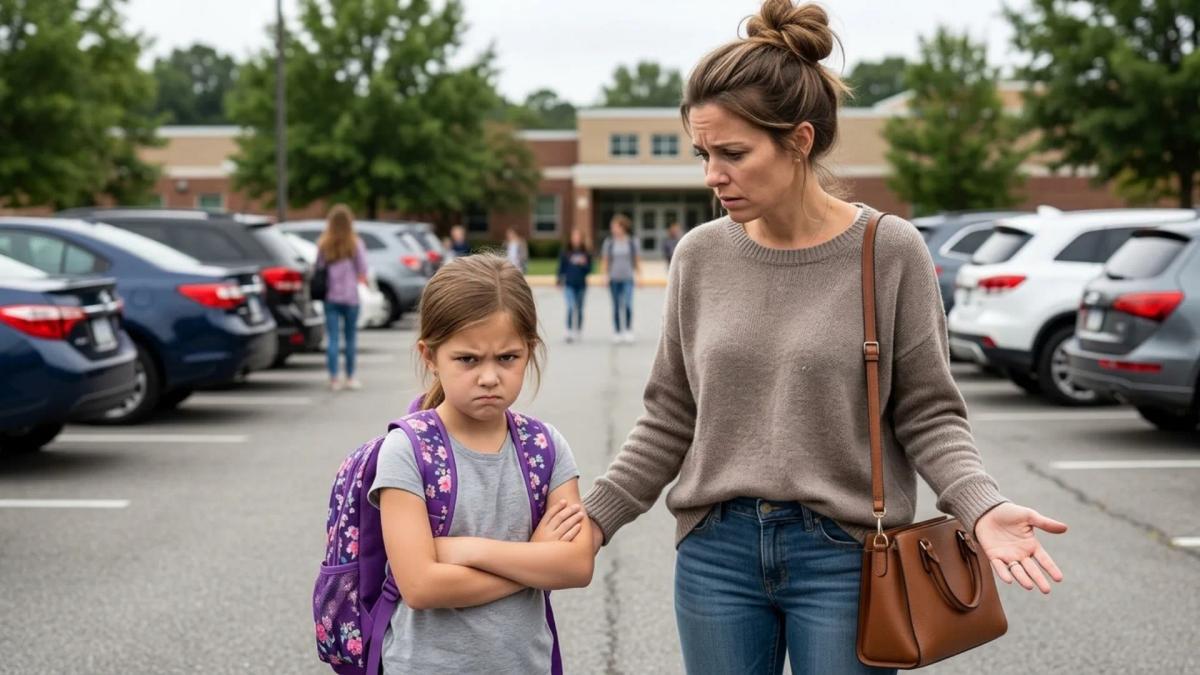
The child throwing a fit in the parking lot after school isn’t being difficult. Her nervous system is still in school mode and doesn’t know how to land yet.
What helps her land isn’t a correction or a conversation. It’s a calm, warm, low-demand presence. Someone who says, without words: the rush is over. You can breathe.
That’s the microritual — just a few minutes of deliberate slowing down, together.
(You can’t always control how the transition starts. You can usually influence how it ends.)
Five microrituals that actually work
These aren’t prescriptions; they’re examples. The ones that stick are the ones that fit your family’s rhythm, your child’s temperament, the particular texture of your days.
The threshold moment-before anything else happens, before bags are dropped or phones checked-is a simple ritual that can set a positive tone, encouraging parents to create small, meaningful rituals that strengthen bonds from the start of the reunion.
The car decompression. If you drive to pick up, the ride home can be a natural decompression zone. Music she likes, no immediate questions about homework or behavior, just side-by-side presence while the day falls away. Some kids talk more in the car because they don’t have to make eye contact, and not making eye contact, it turns out, can make honesty easier.
The snack ritual. Food and connection have always gone together for good reason. Something to eat, sitting down, no agenda. Ask something specific: “What made you laugh today?” or “Was there a moment that felt hard?” or just sit quietly while she eats and let her lead.
The body-first greeting. For younger kids, especially, before words, a chase around the living room, a piggyback ride, rolling on the floor, five minutes of the kind of physical play that resets the nervous system faster than any conversation could. Roughhousing, it turns out, is a form of reconnection.
The after-work landing. For parents coming home from work: resist the pull to go straight into house-mode. Ask for five minutes to change clothes, take three breaths, shift gears. Then show up. The difference between arriving distracted and arriving present is something children feel in their bodies, even if they can’t name it.
(None of these require a perfect day, a perfect mood, or a perfect parent. They just require showing up for a few minutes,s like the reunion matters. Because it does.)
On not having the energy for any of this

Let’s be honest: some days you walk through that door running on empty. The tank isn’t low — it’s at zero. And the idea of doing a “threshold moment” or a “snack ritual” feels not just exhausting but almost absurd.
That’s real. And the answer isn’t to push through and perform a connection you don’t have inside you.
The answer is to do the smallest possible version of the thing.
No energy for the hug and the question? That’s okay. Just the hug. Can’t sit through the snack ritual? Sit for two minutes while she starts eating, then get up. Nothing left for physical play? Lie on the floor next to him for a moment. Let him climb on you if he wants to. That counts.
Connection doesn’t require your best self. It requires your present self, whatever version of the present is available today.
Children are extraordinarily good at sensing when a parent is truly depleted. And what they need in those moments is honesty.
An “I’m really tired today, but I’m here,” said with warmth, is modeling something they’ll need their whole lives: how to show up for the people you love when there’s almost nothing left.
(You showing up tired is still you showing up. That’s not a little. That’s almost everything.)
Quality versus quantity — and why the framing matters
The phrase “quality time” has always carried a faint whiff of guilt. It emerged, historically, as a reassurance for working parents, a way of saying: it’s okay that you’re not present all day, as long as the time you have counts.
But it quietly created an impossible standard.
Quality time assumes a level of emotional availability and intentional focus that no human being can sustain through an entire evening, every day, without breaking down.
What research on child development actually suggests is something different and far more generous: what children need isn’t sustained, high-quality presence.
They need repeated moments of connection scattered throughout the day. Brief, real, warm moments that say, over and over: you matter to me. I notice you. I’m here.
A five-minute reunion, a minute of eye contact at breakfast, a quick joke in the hallway, or a hand on the shoulder while she does her homework.
None of these is “quality time” in the aspirational sense. All of them together are what a connection actually looks like in a real family living a real life.
(You don’t need an album of perfect moments. You need enough small moments that she never doubts she’s in yours.)
In the end
The five minutes after pickup, after work, after the door opens, they’re not magic. They won’t undo a hard morning or fix a heavy week.
But they accumulate. And what they accumulate, over months and years, is a vivid sense of being known, of being welcome, of being worth a pause.
That’s what she’ll remember. Not the trips, not the big conversations, not the carefully planned activities, though those matter too. She’ll remember the ordinary rhythm of coming back to you and finding you there.
Present. Warm. Not perfect, but there.
(If today’s reunion didn’t go the way you wanted — if it was rushed, flat, if someone cried in the parking lot — bedtime still comes. Tomorrow’s pickup still arrives. The next moment is always one more chance to land.)
FAQs
What if my child doesn’t want to reconnect right away and needs space?
Some kids, especially more introverted ones and older children, decompress better alone first. That’s not rejection; it’s regulation. You can respect that and still hold the ritual lightly: a brief check-in, a touch on the shoulder, “I’m here when you’re ready.” The signal still gets sent. The door stays open.
Is there a wrong way to do the reunion?
The most common mistake is leading with logistics or correction: “Did you do your homework?” “Your teacher messaged me.” “Why is your backpack in the middle of the room again?” Even well-intentioned, this sends the message that the reunion is a status meeting, not a homecoming. Save the admin for later. Let the first few minutes be just about being back together.
What if our routine is so chaotic that there’s no natural reunion moment?
Create a small anchor, even an artificial one. A specific phrase you always say at pickup. A particular song in the car. A two-minute ritual before the homework rush begins. Predictability itself regulates children. The ritual doesn’t need to be long; it needs to be reliably yours.
My child always seems angrier or more difficult right at pickup. Is that normal?
Very. Psychologists sometimes call this “after-school restraint collapse.” Kids spend the day holding it together, and the moment they’re safe with you, they fall apart, because they finally can. The meltdown at pickup is often a sign of secure attachment, not a problem with the relationship. The best response is to stay calm, lower demands, and let the decompression happen.
Does this change as children grow?
Yes. In the early years, the ritual matters more than the content; presence is what regulates. Between five and eight, conversations gain more substance, and the window of openness still exists, but may be shorter. In the pre-teen years, this moment sometimes disappears for a while and comes back in a different form. What stays is the pattern: the child who learned she can count on this reunion will, sooner or later, keep looking for it.