You love your children. That part isn’t in question.
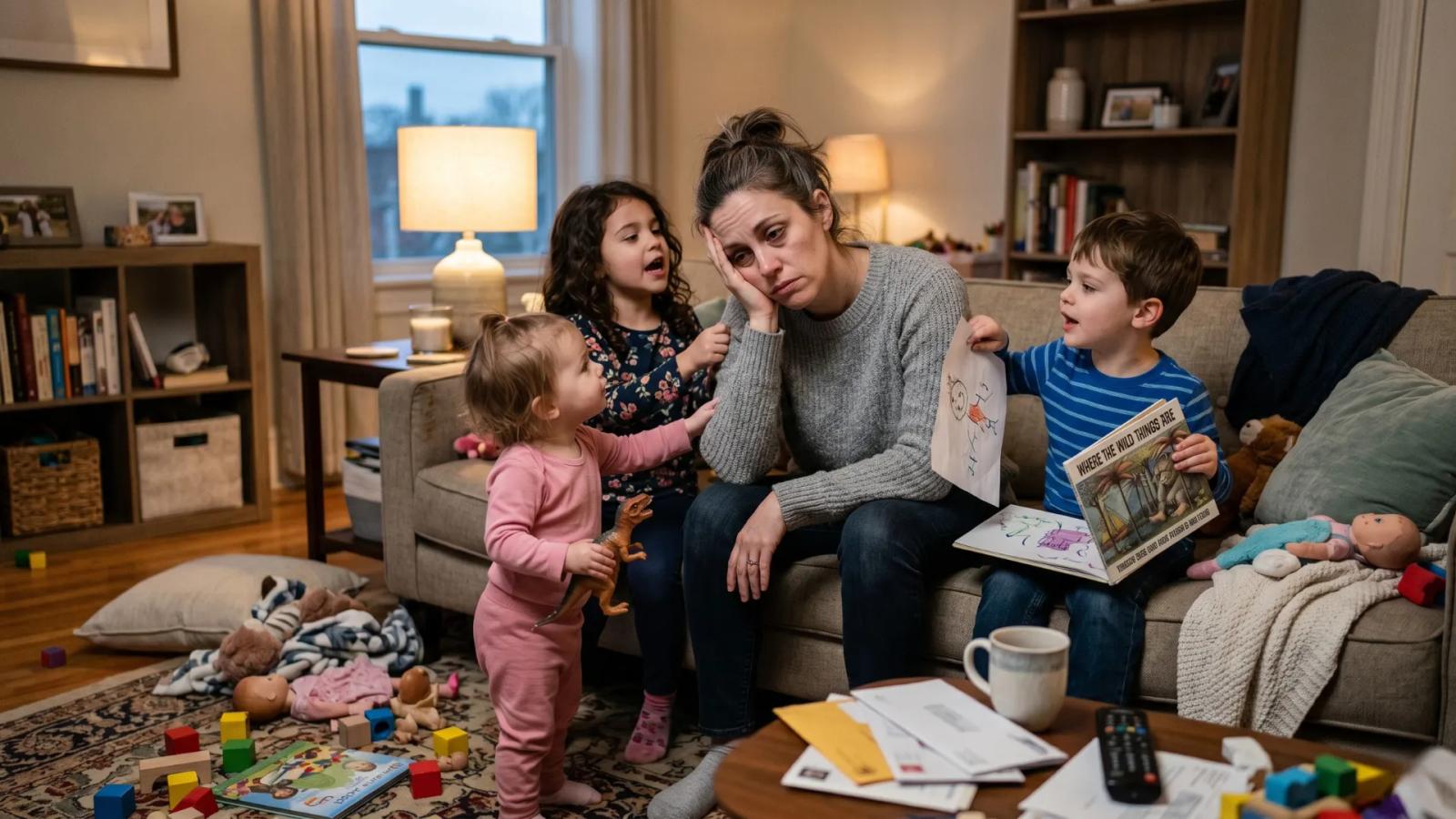
And you’re exhausted in a way that sleep doesn’t fix. You go through the motions of the day with a competence that looks fine from the outside and feels hollow from the inside. You find yourself counting down to bedtime not because the day was particularly hard, but because you just need it to end. You catch yourself in the middle of something ordinary, a bath, a story, a question about what’s for dinner, and you realize you are completely, absolutely nowhere in that moment.
You feel guilty about this, and the guilt makes the exhaustion worse, because on top of everything else you’re now managing the distance between the parent you are right now and the parent you want to be.
This has a name. It’s parental burnout, and it’s real, researched, and more common than most people know. It has nothing to do with how much you love your children or how good a parent you are.
The parents most likely to experience burnout are often the ones who care the most. That’s not ironic. It makes complete sense, and it’s worth understanding why.
What parental burnout actually is
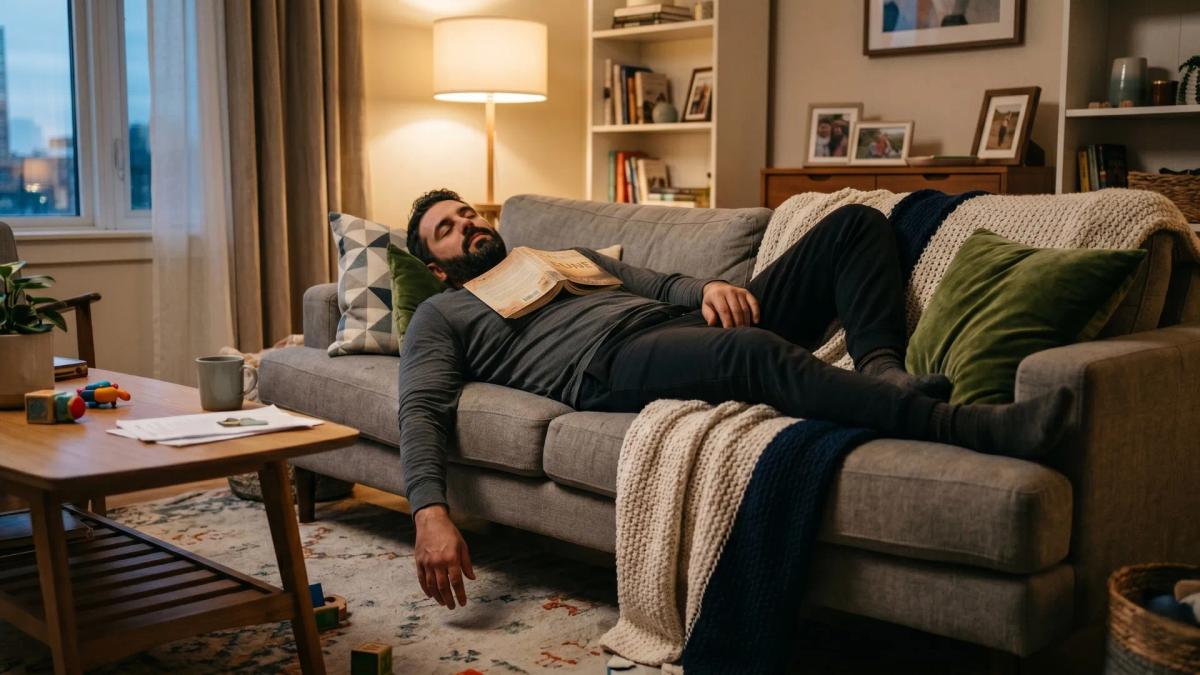
Parental burnout is a state of chronic exhaustion that results from sustained, high-demand caregiving without adequate recovery. It has four recognized dimensions, distinct from general tiredness or a bad week: overwhelming exhaustion related specifically to the parental role, emotional distancing from one’s children as a protective response to that exhaustion, loss of the sense of effectiveness and fulfillment in parenting, and a contrast between who you are now as a parent and who you used to be or wanted to be.
Research on parental burnout has grown substantially in the last decade. It affects parents across income levels, family structures, and cultural contexts. It’s not caused by not loving your children enough, not trying hard enough, or not being grateful enough. It’s caused by a sustained imbalance between the demands of parenting and the resources available to meet them.
That distinction matters because real causes have real solutions. The causes that are moral failures don’t.
You’re not burned out because you’re a bad parent. You’re burned out because you’ve been doing an enormous amount of work, much of it invisible, for a very long time, without o suficiente do que te restaura. Isso é uma questão de recursos, não de caráter.
Why is it so hard to name
Parental burnout is uniquely resistant to naming for several reasons, and understanding these helps explain why so many parents carry it for so long before recognizing it.
The love makes it confusing. Burnout in the workplace is easier to identify because the relationship between worker and job is legible: you can be exhausted by your work without loving your work. The parent-child relationship is different. Exhaustion and love coexist in a way that makes the exhaustion feel like a betrayal of the love, which makes it harder to admit, harder to name, and much harder to address.
The invisibility of the work. Most of what parenting costs is unaccounted for: the cognitive load of tracking every need, the emotional labor of regulating your own state while co-regulating a child’s, the physical presence required even when nothing particular is happening. Because so much of it is invisible, the exhaustion produced by it also feels like it shouldn’t count.
The comparison trap. "Other parents manage." "Parents in harder situations than mine don’t complain." "I chose this." These comparisons don’t make the exhaustion less real; they just make it harder to take seriously. Burnout doesn’t require your life to be objectively hard. It requires a sustained gap between demand and recovery. That gap can exist in any life.
The cultural expectation of selflessness. Parenting culture, in many contexts, valorizes self-erasure. The good parent puts the children first, always, without complaint. Admitting exhaustion, let alone burnout, risks being read as not loving your children enough, not being up to the role, not being sufficiently grateful for what you have. That risk keeps many people silent for a very long time.
The silence is part of what makes it worse. An experience that can’t be named can’t be addressed. And an experience that can’t be addressed just continues, quietly, until something gives.
What it feels like from the inside
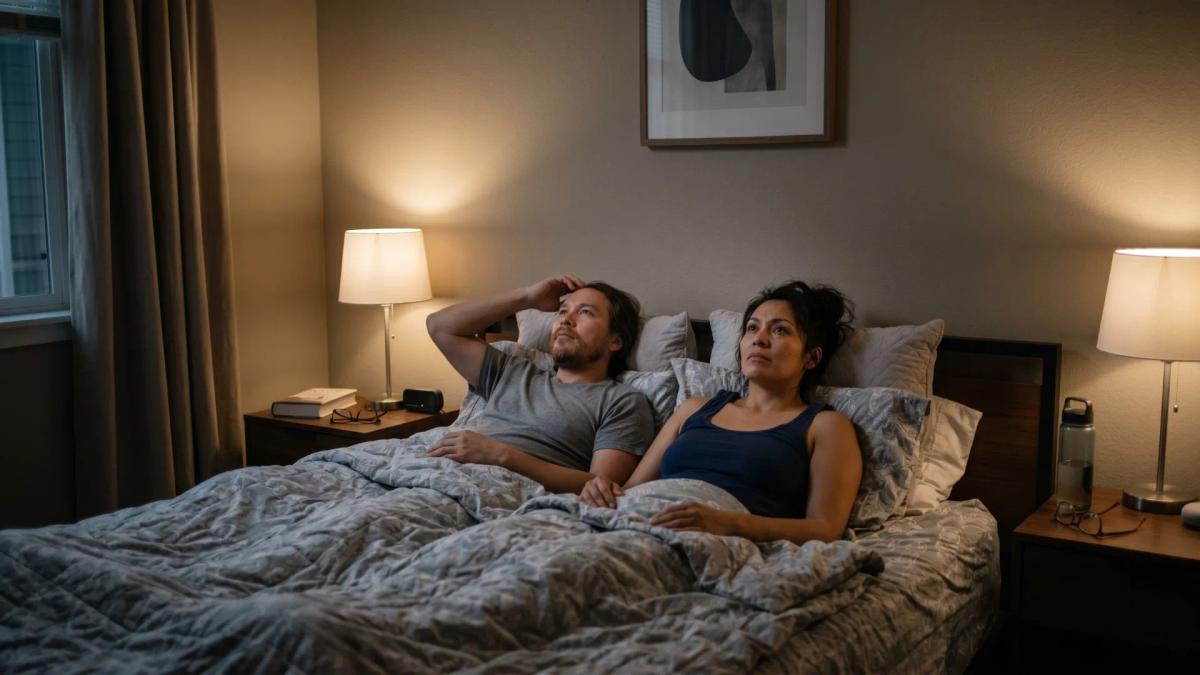
Parental burnout doesn’t always look dramatic from the outside. Often, it looks like a parent who is functioning, getting things done, keeping everyone alive and mostly okay. The internal experience is different:
- A tiredness that sleep doesn’t touch, that is present even after a good night, that seems to come from somewhere deeper than the body.
- Emotional flatness around the children, not dislike, not resentment, just a kind of numbness where the warmth used to be. An absence where there used to be presence.
- Going through the motions of parenting with technical competence but without genuine engagement, being physically there and emotionally somewhere else.
- A creeping distance from the parent you remember being, or the parent you wanted to be, and a loss of confidence that you can get back there.
- Irritability that feels out of proportion, a shorter fuse than you recognize as yours, reactions that surprise you with their sharpness.
- The feeling that you are performing parenting for an audience that includes yourself, executing the role rather than living it.
- A privatized loneliness: surrounded by people, needed constantly, and somehow profoundly alone with all of it.
If you recognize yourself in more than two of these, you’re probably not just tired. And the distinction matters, because tiredness resolves with sleep, and burnout requires something different.
What makes it more likely
Burnout doesn’t arrive randomly. Certain conditions consistently increase the risk, and recognizing them is the first step toward changing them:
Parenting in isolation. Without a co-parent, without nearby family, without a community that shares the load, the demands concentrate entirely on one person with no distribution and no relief. The village isn’t just a nice idea. It’s a structural necessity that a significant number of parents are managing without today.
High personal standards for parenting. The parents most likely to burn out are those who care most, hold themselves to high standards, and take their roles seriously. The gap between the parent they want to be and the parent they have resources to be is where burnout lives.
Lack of recovery time. When the demands of parenting are continuous, and the space between them is consistently filled with other demands, such as work, household management, or relationship maintenance, the nervous system never fully recovers. Depletion compounds over time until the baseline shifts downward.
A child with higher-than-average needs. Parenting a child with significant medical, emotional, developmental, or behavioral needs produces a demand load that is categorically higher than the average parenting load. The risk of burnout in these families is substantially elevated, and the cultural recognition of this is substantially inadequate.
Unacknowledged grief or loss. The gap between the parenting experience you imagined and the one you’re having, unprocessed, accumulates as an emotional weight that compounds everything else. This includes grief about a child’s diagnosis, about a relationship that didn’t survive parenting, about a version of yourself that hasn’t been accessible since the children arrived.
Burnout is almost never caused by one thing. It’s an accumulation, and accumulations are hard to see from inside them. It often takes naming it to be able to trace it back to what built it.
What helps, realistically

Recovery from parental burnout isn’t a weekend away, though a weekend away is nothing. It’s a sustained shift in the ratio between demand and recovery, which usually requires changes on multiple fronts at once.
Name it, to someone
The first thing that helps is saying it out loud to at least one person who won’t immediately reassure you that you’re doing great. A partner, a friend, a therapist, a stranger on the internet who clearly knows what you’re talking about. The point is that the experience shifts from private to shared, which immediately and significantly changes its weight.
Reduce the invisible load where you can
Not all of the cognitive and emotional labor of parenting can be redistributed, but some of it can. What are you tracking that someone else could track? What are you managing alone that could be shared? The audit is usually more revealing than expected because invisible labor is, by definition, hard to see until you look directly at it.
Find recovery that actually works for you.
Not what the self-care industry says should restore you, but what actually does. For some people it’s physical: movement, sleep, a walk without anyone talking to them. For others, it’s social: a conversation with someone who knows them outside of their parenting role. For others it’s solitude. The form matters less than the reality of it: something that genuinely interrupts the demand and lets the nervous system downshift.
Lower the floor, not the ceiling
Burnout is often maintained by the gap between the parent you want to be and the parent you have resources to be right now. Temporarily lowering what "good enough" looks like—not permanently, not as defeat, but as an act of triage—can reduce the drain of that gap while recovery happens. The ceiling can come back up. Right now, the floor is what matters.
Consider professional support
Parental burnout responds well to therapy, particularly approaches that address both the practical—what can change structurally—and the emotional—what you’re carrying that hasn’t been put down. This isn’t a sign that something is seriously wrong. It’s a sign that what you’re dealing with is real enough to deserve actual support, not just coping.
Recovery from burnout is slow. Slower than you want it to be, and slower than you think it should be given how much you’re trying. That’s not a sign that it isn’t working. It’s a sign that the depletion was deep, and deep things take time to refill.
In the end
You love your children. That part was never in question.
And you’re exhausted in a way that has a name, a cause, and a path through it that doesn’t require you to love them less or want less for them or become a different kind of person. It requires you to take seriously the fact that you are a person with a nervous system that has limits, doing an enormous amount of work that the world consistently undervalues, including, probably, you.
The exhaustion you’re carrying is legitimate. The fact that you’ve been carrying it quietly doesn’t make it smaller. It makes it heavier.
You are allowed to put some of it down.
Not the children. Not the love. Just the weight that accumulated around them that you were never supposed to carry alone.
FAQs
How is parental burnout different from depression?
There is significant overlap in symptoms, and the two can coexist. The primary distinction researchers use is that parental burnout is role-specific: the exhaustion, distancing, and loss of effectiveness are centered on the parenting role, while other areas of life may feel more intact. Depression tends to be more pervasive. That said, parental burnout left unaddressed can develop into or trigger depression, and a professional assessment is the most reliable way to understand what’s happening for any specific person.
I feel like I’m a bad parent for feeling this way. How do I deal with that?
The guilt is almost universal in parental burnout, and it’s one of the things that make it harder to address. What tends to help is reframing: you’re not feeling this way because you’re a bad parent; you’re feeling this way because you’ve been trying very hard to be a good one for a very long time with insufficient support. Those are different explanations with different implications. The first calls for self-criticism. The second calls for structural change.
My partner doesn’t recognize what I’m describing. How do I get them to understand?
This is one of the most common and most painful aspects of parental burnout: experiencing it in a relationship where the other person doesn’t see it or doesn’t acknowledge it. Sharing specific, concrete descriptions of what the experience is like from the inside tends to land better than the label. And if that conversation isn’t possible or productive, having it with a therapist, separately or together, often is.
Will I feel like myself again?
Yes. Parental burnout is not a permanent state, and it’s not a verdict on who you are as a parent or a person. Recovery is possible, and most parents who address it describe returning not just to their previous baseline but to something that feels more sustainable, because addressing it usually involves changes that were needed anyway. It takes longer than you want. You will feel like yourself again.