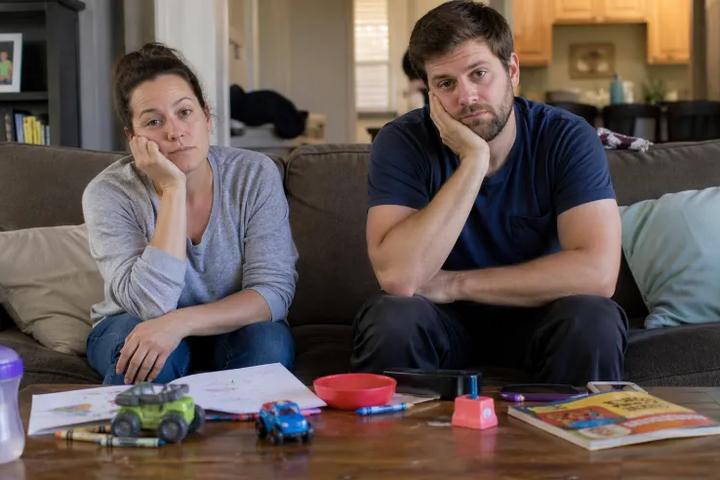
It was around eleven at night. The house had finally gone quiet. And I was lying in bed running a mental list of everything I hadn’t done.
Hadn’t read the bedtime story. Lost my patience at dinner. Was on my phone when he wanted to show me something. Answered in a way I didn’t need to.
And the feeling that lingered wasn’t tiredness. It was that voice: “I should have done more.”
I know that voice well. It always shows up after my son falls asleep. Never before, never during. Always when there’s nothing left I can do about it.
A tab that never closes
There’s a dad I know — a present, attentive guy, the kind who remembers the teacher’s name and actually asks how recess went — who told me once that he feels like a bad dad almost every day.
I asked him why. He thought for a second and said: “I don’t know. The tab never closes.”
That image stuck with me. The tab never closes because the criteria keep shifting.
If you were more present this week, the voice will say you could have been calmer. If you were calmer, it’ll say you worked too much. If you worked less, it’ll say dinner wasn’t good enough.
The voice doesn’t measure what you did. It measures the gap between what you did and an ideal that keeps moving.
Where the measuring stick came from
No previous generation of parents was held to the same standard as ours.
Not that our parents were better or worse. It’s that they didn’t have access to an endless stream of examples showing what an “ideal” parent looks like.
There was no feed. No mindful parenting posts. No constant background hum of someone else doing it better than you, in real time.
My grandfather probably didn’t know what a “developmental window” was. And he raised kids who turned out fine. Who had friends, relationships, careers. Who made it through childhood in one piece.
Today we know all of this. What was supposed to be useful became weight. The information that exists to help us often just turns up the volume on that voice.
What guilt does to the day
There’s a cruel irony in all of this.
The guilt about not being present enough consumes exactly the energy that would make presence possible.
You walk into a moment with your kid already carrying the weight of everything you didn’t do before. And you leave more drained than when you came in.
There was one afternoon where I actually shut the laptop early. Went to play. And spent the whole time thinking I should do this more, that time goes too fast, that I miss too much. Instead of just playing.
So: I was present, and I used that time worrying about not being present enough.
The voice is efficient like that.
What a mom told me once
I talked to a mom who’d been caught in this spiral for a long time. She woke up already listing everything she wasn’t going to get done. Fell asleep reviewing everything she hadn’t. The whole day was a negotiation between what she thought she should do and what real life would actually allow.
At some point she stopped and asked her daughter — who was about five at the time — what she liked doing most with her mom.
She was expecting something like “going to the park” or “reading stories.”
The girl thought for two seconds and said: “Lying on your lap watching TV.”
The exact thing the mom had filed under “not being a good mom.”
What kids actually remember
There’s something I’ve learned — more from reading than from living it, because my son is still small — about what kids actually hold onto from childhood.
It’s not the perfect moments. Not the planned activities, the organized outings, the weekends packed with stimulation.
It’s the moments where mom or dad was just there. Present. Relaxed enough to be someone worth being around.
And they hold onto the moments where mom or dad got it wrong and came back. Said sorry. Didn’t pretend nothing happened — but didn’t turn it into a production either.
That return is just as formative as the presence. Maybe more. Because it teaches that relationships survive mistakes.
The voice isn’t a compass
I used to think the voice was useful. That it kept me honest. That it stopped me from going soft.
But the voice never points to anything specific I can actually change. It’s vague. It says “you should have done more” without saying more of what. And when I do more, it doesn’t go away. It just changes the subject.
Useful guilt points to something concrete and fades once you act on it. The kind that stays, that grows, that has no clear object — that’s not information. That’s noise.
And the dad lying awake at midnight going over everything he didn’t do is, paradoxically, probably the one who’s doing enough. Because that voice doesn’t exist in people who don’t care.
It exists in people who care too much. And who learned, somewhere along the way, that caring too much means demanding too much of themselves.
You don’t need to do more. What you already do — imperfect, exhausted, full of bad days — is so much more than the voice lets you see.