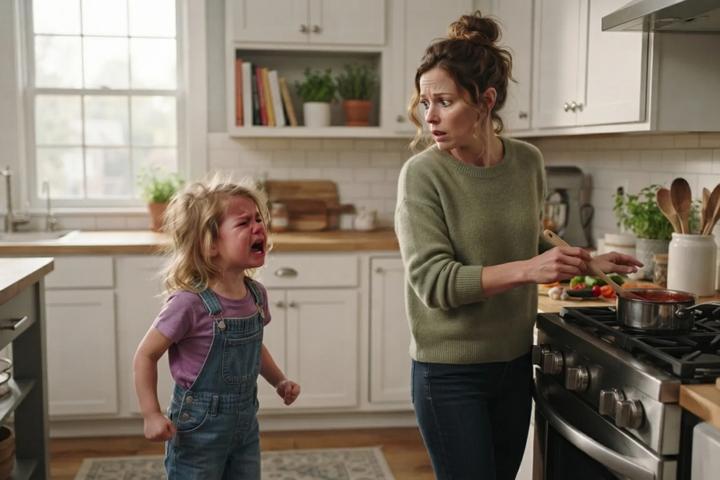
You are standing in the kitchen, repeating yourself for the fourth time.
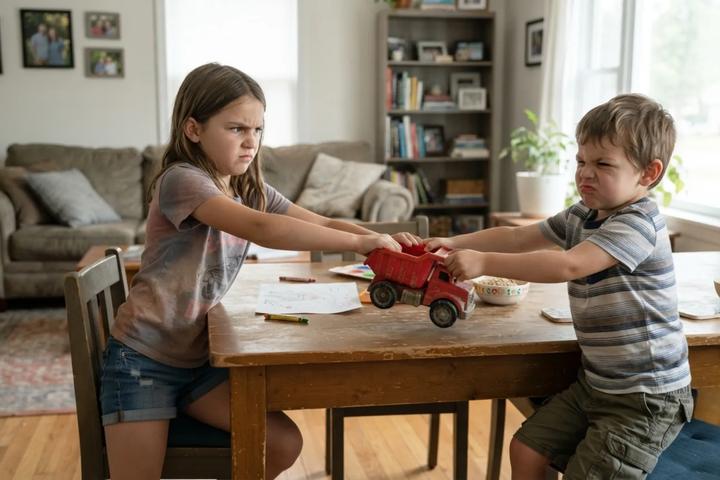
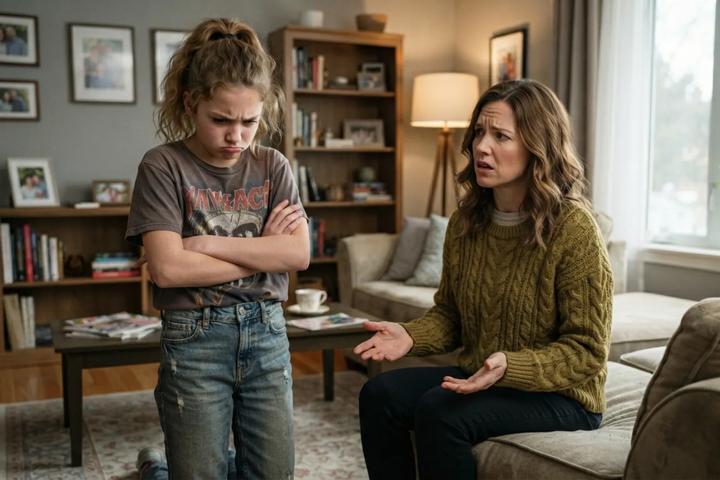
Negotiating bedtime like an international peace treaty. Trying to stay calm while your child loudly explains, with absolute conviction, why the thing you just asked them to do is unreasonable, unnecessary, or somehow impossible.
And then, in the middle of it, something hits you.
Oh shit, I used to do this too.
Not exactly like this, maybe. But close enough.
You were once the child inside the moment, fully convinced your reaction made sense. Now you are the parent standing on the outside, trying to hold the frame without losing your mind.
That is a strange place to be.
What came before, and what comes next
There are three phases in this story.
Phase one: you were the child.
You were fully inside your own experience. Your feelings were enormous, your needs were urgent, and your perspective felt like the whole truth because, developmentally, it was the only truth you had.
You did not have perspective.
You were the perspective.
Phase two: you are the parent.
Now you see the pattern from the outside. You understand why the limit matters. You can see the tiredness, the impulse, the testing, the fear, the need underneath the behavior.
And you carry the weight of responding well enough, often enough, that your child can grow through this stage.
Phase three: if you are lucky, you become the grandparent.
And for the first time, you get to watch the whole thing unfold without being at the center of the storm.
You may see your child become the parent. You may hear your own words come out of their mouth. You may watch them lose patience, repair, try again, soften, hold the line, and learn the same hard lesson from the other side.
Phase one is mostly gone from memory.
Phase three still lies ahead.
Right now, you are in the middle.
You did not “grow out of it” - You grew through it
Here is the humbling truth most of us forget:
You did not magically become reasonable one day.
You were dragged, kicking and screaming, through that phase.
By adults who were more tired than you knew. By people who repeated themselves more times than you remember. By someone who held a boundary, cleaned the mess, absorbed the protest, and tried again the next day.
You do not remember the thousands of small corrections.
You do not remember how often someone chose restraint instead of escalation. You do not remember the patience that ran thin, the sighs swallowed, the moments when your parents had to decide whether this was worth a fight or not.
But you benefited from it.
That is the part that feels different now.
Right now, you are doing the carrying for your child.
And your child, like you once were, is oblivious to what that costs.
Not because they are ungrateful. Because they are children. They are still inside phase one, fully living the experience you are trying to guide them through.
The long view changes something
When you realize this is phase two of three, something shifts.
Not because your child suddenly behaves better. They probably will not. The pajamas may still be unacceptable, brushing their teeth may still become a heated dispute, and bedtime may still require the emotional endurance of a minor diplomatic summit.
But you see the moment differently.
This is not just chaos. It is continuity.
A living chain of adults carrying children through immaturity until those children become adults capable of carrying someone else.
One day, maybe sooner than you expect, you may be standing slightly outside the storm. Watching your grown child repeat your sentences. Watching them try to stay calm. Watching them understand, finally and deeply, what you were doing all those years.
And maybe a quiet, compassionate smile will form.
Maybe even a little amusement.
What this perspective gives you now
This is not about excusing behavior.
It is not about lowering standards, becoming passive, or waiting for time to do all the work. Children still need limits. They still need structure. They still need adults who can say no and mean it.
But perspective changes the way you experience the moment.
When you remember that you once stood where your child stands now, pushed where they push, and only made it through because someone else held the line for you, your response can soften without giving way. You can become firmer and calmer at the same time.
That is the strange gift of the long view.
You were carried once. Now you carry.
And one day, if life is kind, you may get to watch the story continue from a little farther away, with more tenderness than urgency.
For now, though, it is your turn to break a sweat.
When things get tough, remember:
You are in phase two.