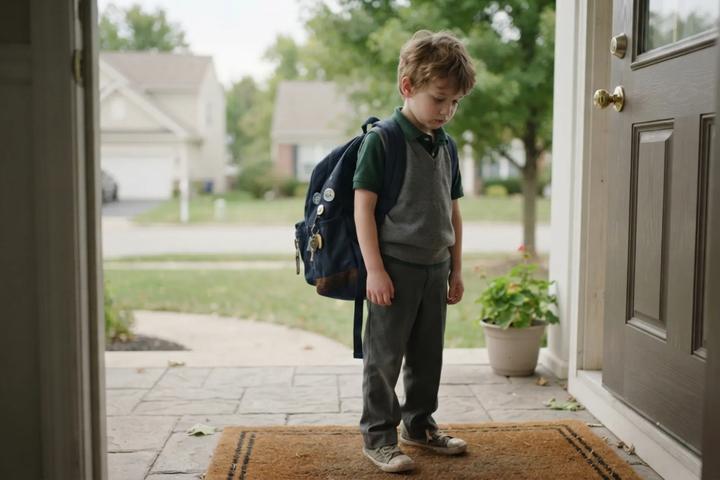
Last week, he wanted you by his side for everything. Today, he barely looks up. Yesterday, she laughed with you for twenty minutes straight; today, everything you say seems to annoy her.
You haven’t changed. The house hasn’t changed. But suddenly, the child you knew by heart seems replaced by someone wearing the same body but acting on a totally different frequency.
If your child is between 9 and 12 years old, what’s happening has a name, a cause, and, breathe, an end.
What’s happening in their body and brain

Pre-adolescence is the period when the hypothalamic-pituitary-adrenal axis, the system that regulates hormones, begins to gradually and irregularly awaken. Estrogen, testosterone, cortisol, DHEA: all rising, falling, and rising again without warning.
The result isn’t just physical; it’s neurological. The amygdala, the region of the brain responsible for processing threats and intense emotions, becomes hypersensitized. The prefrontal cortex, the part responsible for regulating impulses and making decisions, is still very much under construction.
In other words, their emotions are in overdrive, but the brakes aren’t fully working yet.
A 10-year-old who explodes over a comment about how she packed her backpack isn’t being dramatic. She literally has less capacity to regulate her emotional response than she did two years ago, and less than she’ll have in four.
(The window between 9 and 12 is neurologically more turbulent than adolescence proper in many ways. Nobody talks about this because the child isn’t 13 yet, and because admitting it would make the next few years feel even more terrifying than they already are.)
Why the mood swings feel so personal
When a 4-year-old has a meltdown, nobody questions that it’s developmental. When a 10-year-old goes from happy to furious in two minutes over something apparently trivial, the immediate read is different: she’s being rude, ungrateful, difficult.
This reaction is understandable, and recognizing this can help you feel more compassionate and patient.
In pre-adolescence, the child begins to process the world with greater emotional intensity, but still lacks the maturity to manage it.
Feelings that used to fade in minutes now hang around for hours. Criticism that used to roll off her shoulders can now send her into an emotional spiral she doesn’t even understand herself.
The routines and your consistent presence are what help your child feel safe and supported during this intense phase.
The version school sees is often contained. The version you see at home is what’s left after a full day of holding it together.
(The child the teacher calls “so easygoing” and the child who just slammed the bedroom door are one and the same. You’re not doing anything wrong; you’re simply her safe place—again.)
What’s changing, and what isn’t just mood

Not everything that looks like a mood swing is just hormones. Pre-adolescence is also the period when other things begin to emerge that deserve attention:
- The need for privacy increases in a real and legitimate way, such as respecting her personal space and boundaries, which supports her identity development and helps parents understand her growing independence.
- Peer opinion starts to matter more than parental opinion in certain areas. This is expected and healthy.
- Self-consciousness about the body, about what others think, about where she fits socially, arrives with force. Shame and embarrassment become frequent emotions.
- Abstract thinking begins to develop, and with it, the ability to question rules, spot inconsistencies, and disagree with an actual argument.
Knowing how to tell apart hormonal swings from typical pre-adolescent development and signs of emotional or mental health concerns helps parents respond appropriately, reducing unnecessary worry and ensuring support when needed.
(Not every bad mood is a crisis, and knowing the difference helps parents respond appropriately without overreacting or underreacting, maintaining a healthy balance during this turbulent phase.)
How to calibrate your expectations without losing your mind
A common trap for parents is trying to fix every mood swing. We ask what happened, try to smooth things over, offer advice, or remind them it’s not that serious. It all comes from love, but often, it backfires.
What actually helps is being present without pushing for answers. Here are a few things that make a difference;
Don’t take the mood personally while it’s happening. Wait until things calm down to talk about it. In the heat of the moment, your reaction often just adds fuel to the fire.
Reduce the number of open-ended questions during low moments. “How are you?” and “What happened?” rarely work when she’s dysregulated. A quiet presence or a simple observation opens far more.
Focus on the behavior, not the person. Setting limits like “You can’t talk to me like that” is important. Avoid labels like “You’re so ungrateful”—those stick and hurt. Address the action, not who they are.
Choosing quiet activities like driving or playing a game helps your child feel connected and understood without pressure.
Keep the rituals even when she pushes back. Goodnight, she answers with a grunt. The dinner she eats in silence. The routine she complains about but would notice if it disappeared. Consistency is what anchors when everything else is swinging.
(You don’t need to fix every bad mood. You need to survive it without losing the connection. Those are different things.)
What she needs you to know, even without being able to say it

Pre-adolescence is a phase of identity construction that happens from the inside out, messily and not always legibly to anyone watching from the outside.
Underneath the bad moods, the slammed doors, and the “you don’t understand,” what she’s trying to say is something much simpler;
That she’s changing and doesn’t yet know who she’s becoming. That the emotions are too big for the body she still has. That she needs space to be difficult without losing you.
That last point is the most important; she needs to know that the bond survives the bad mood. That you don’t leave when she’s unbearable. That the love between you doesn’t depend on her being regulated, pleasant, or grateful.
(She can’t ask for that. But it’s exactly what she’s testing.)
In the end
Pre-adolescence isn’t a sign that something went wrong. It’s a sign that something very big is happening, inside a body that’s still too small for it, with tools that are still insufficient, under a gaze she anchors on you even when she does everything she can to pretend she doesn’t.
Every mood swing you get through together, without losing yourself, without losing her, is a deposit in the trust account that will carry you through the adolescence still ahead.
You don’t have to figure out every mood. Just keep showing up for them.
(In a few years, she’ll look back and remember that even when she was unbearable, you stayed. That’s what lasts.)
FAQs
How do I know if it’s a normal swing or something that needs professional attention?
Normal mood swings at this stage are intense but brief; they last hours, not weeks. Signs that warrant evaluation: persistently low mood for more than two weeks, significant social withdrawal, a notable drop in school performance, changes in appetite or sleep, talk of feeling worthless or hopeless. In those cases, a mental health professional is the right path.
Is she like this with everyone or just with me?
Probably just with you, and that’s not a bad thing, even if it hurts. The version school and friends see is contained. The version you see is what’s left after a full day of holding it together. Being the destination for the overflow is a sign of attachment, not a problem with the relationship.
Should I give more freedom or more structure at this stage?
Both are calibrated. Structure in routines and non-negotiable limits that anchor. Progressive freedom in areas where she can start making her own decisions, which builds autonomy. The most common mistake is tightening everything when she gets difficult or loosening everything to avoid conflict. Neither works on its own.
How do I stay connected when she seems like she doesn’t want to be?
By continuing to show up in ways that don’t demand immediate reciprocity. Dinner at the table, even if she eats in silence. The casual question without waiting for a long answer. The inside joke only the two of you share. Connection at this stage is less conversation and more consistent presence, the certainty that you’re there, whether she wants to engage or not.