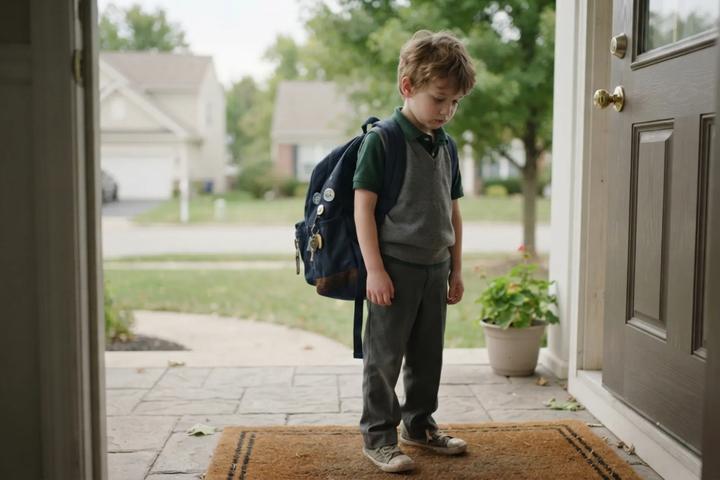
He heard “no.” Or you turned off the tablet at the wrong moment. Or you simply existed at a time when he needed a target for the frustration that couldn’t stay inside him anymore.
And then it came: “I hate you.”
Or “You’re the worst mom in the world.” Or “I want to go live with a different family.” Or that look that skipped the words entirely and said everything with a slammed door.
It hurts even when you know, rationally, that it shouldn’t, even when you’ve been through this before. Even when you’re a present, loving parent who did everything right that day.
It hurts because you care. And because nobody really prepared us for this moment.
What a child is actually saying when they say “I hate you”
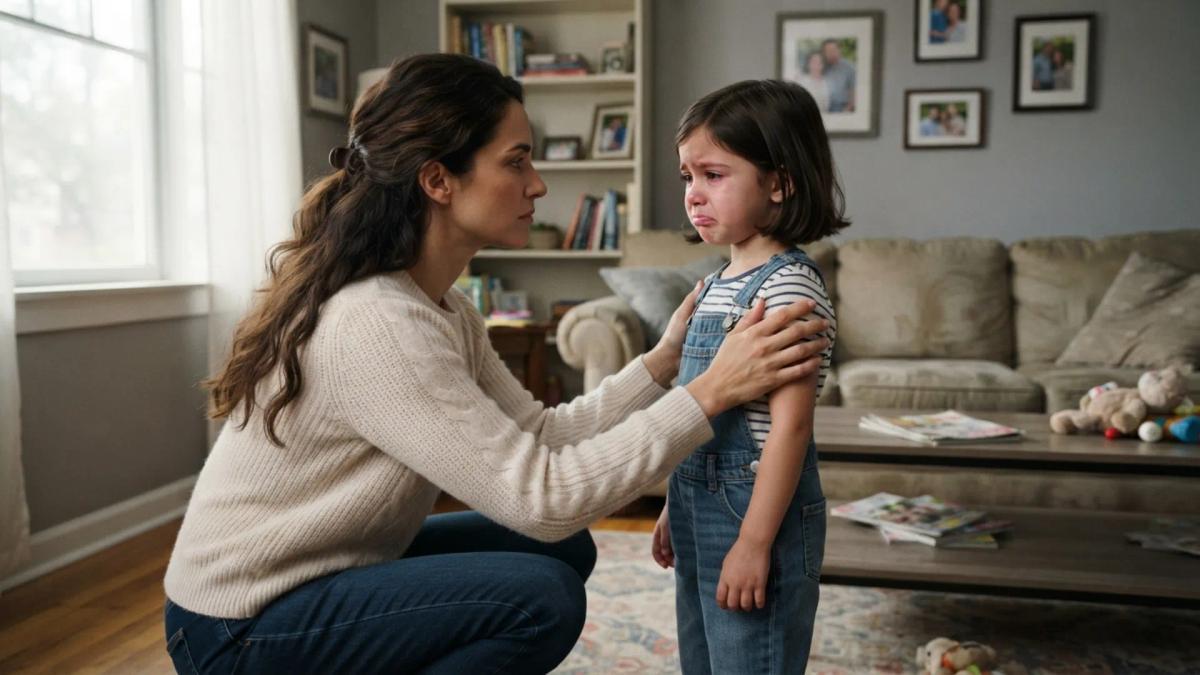
Children don’t have immediate access to sophisticated emotional language. When an emotion is too big for the vocabulary they have, they grab the most intense word they know and throw it at whoever is closest.
“I hate you” rarely means “I hate you.” It almost always means some version of: “I’m furious, and I don’t know what to do with it.” Or: “You frustrated me in a way I don’t know how to name.”
Or even: “Help me. I’m drowning.”
The words are an emotional missile, but you’re not the real target. It’s the emotion she can’t contain.
(There’s something almost paradoxical here. She said it to you because you’re the person she feels safe enough with to fall apart. That doesn’t make it easier to hear, but it changes what it means.)
Why does it hurt so much, even when we “know better”
The instinctive reaction to “I hate you” is visceral. It’s not an intellectual response; it’s a nervous system response. The same system that registers social rejection as physical pain.
Knowing it’s just momentary frustration helps, but it doesn’t switch off the sting. Just like knowing a shot is going to hurt doesn’t make the needle hurt less.
The collision inside you, between understanding of child development and your human reaction, can be managed by pausing before responding and allowing your emotional response to settle, so you can respond more effectively.
The guilt many parents feel afterward, “Why did I let that get to me?”, is unnecessary. Being affected isn’t weakness—it’s just being human in a relationship that matters.
(If it didn’t hurt at all, that would actually be the concerning thing.)
What not to do, and why it’s so tempting

Two common reactions make emotional sense but rarely help:
- Immediate punishment.
- The mirrored emotional reaction.
Immediate punishment. “Don’t you ever talk to me like that again,” the timeout, the phone taken away, the lecture about respect. It comes from the right place; limits exist, and words carry weight. But when punishment happens in the heat of the moment, it addresses the behavior without touching the feeling underneath. Staying calm helps parents feel more in control and capable.
The mirrored emotional reaction. Crying, shutting down, saying “that really hurt me” in a way that places the emotional weight on her shoulders. A child who’s already dysregulated doesn’t have the capacity to process the impact she’s caused. What she receives is more material for a crisis that’s already too big.
Both reactions have something in common: they respond to the words as if they were the real message. They aren’t. They’re the wrapping around something that doesn’t have a shape yet.
(What she said was “I hate you.” What she meant was something else. Responding to the real meaning works better than reacting to the words.)
What to do, in phrases that fit the real moment
The goal in the heat of the moment isn’t to resolve, educate, or demonstrate that you weren’t rattled. It’s to hold the ground steady while she finds hers.
A few responses that work:
“I can see you’re really angry right now.” Simple, no drama. Doesn’t ignore what was said, but doesn’t amplify it either. Name what’s underneath.
“That’s okay. I’m here when you’re ready.” Gives space without abandoning. She can step away; you’re not going anywhere. That security is what she needs to feel, even if she can’t ask for it.
“I know you’re angry with me. I still love you.” For moments when you want to name the bond without invalidating the emotion. Short, steady, no pressure.
Calm silence. Stay present without escalating. Practice deep breathing or grounding techniques yourself to model regulation, helping her nervous system sync with yours.
(You don’t need the perfect response. You need not add more fuel. Sometimes the best thing to say is nothing.)
The conversation that comes after
When the storm has passed, and you’re both regulated, the conversation can happen. Not before.
It doesn’t need to be long or formal. It can be simple:
“Do you remember what you said earlier? That hurt me. You can be angry with me, but I’d like us to find different words for it.”
This conversation does two things at once: it validates that you have feelings too (modeling that adults have them) and opens the door to building emotional vocabulary without turning it into a punishment.
What you don’t need to do is demand an immediate, performative apology. Children who are forced to say sorry before they’ve processed the emotion learn to perform remorse rather than feel it.
(The real “sorry” comes when she understands what happened. That takes longer than just the end of the day, and it’s worth more than any apology forced in the moment.) Focusing on patience in these moments helps parents feel hopeful about building understanding over time.
What this moment says about the bond
There’s a beautiful and difficult irony in this: children only say “I hate you” to people they love deeply.
Not to the teacher. Not to a friend. Not to the neighbor. To you. Because you’re the safe place. Because with you, she can be whole, including the parts that are ugly, disproportionate, and wordless.
A bond that survives “I hate you” and comes out intact is the kind of bond she’ll carry for the rest of her life, the idea that love isn’t fragile, that real relationships survive anger, and that being loved doesn’t depend on being perfect.
(She said she hated you. Then she fell asleep in your arms. You already know what’s real.)
FAQs
Should I just ignore what was said completely?
Don’t ignore it, but don’t amplify it either. Acknowledge the big emotion without treating the words as the main message. The conversation about how to express anger differently comes later, calmly.
What if she says this often? When does it become a pattern?
When “I hate you” shows up repeatedly, it’s worth looking more closely at what’s underneath, whether something is happening at school, at home, or in the family dynamic that’s creating chronic frustration. An isolated phrase is just immature emotional regulation. A pattern might be a more persistent call for help.
My older child said this to their younger sibling. How do I handle it?
The same logic applies. There’s a big emotion that I couldn’t find better words for. In the moment, separate and regulate, then talk about the impact of the words, and what he was feeling that got him there.
How do I recover emotionally after hearing this?
Permit yourself to feel what you feel. Talk to another adult, remind yourself of other positive moments from the same day, and know that a phrase said in anger doesn’t define the relationship. And if you need to, take a moment before continuing with the day; you’re also a person who just had to process something hard.