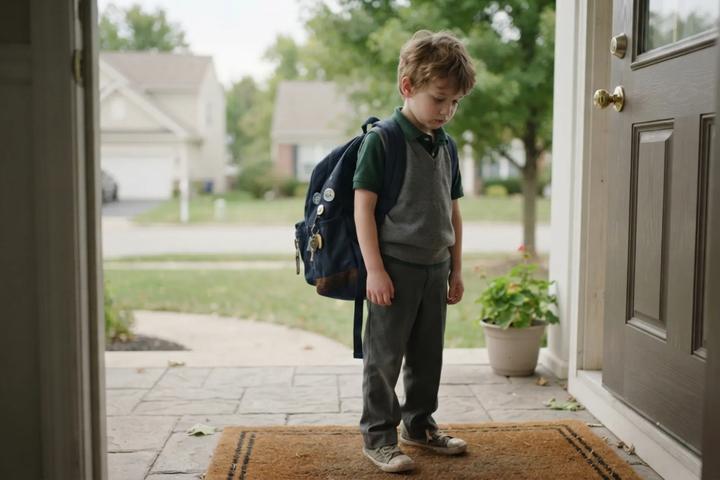
The afternoon was going fine.
And then suddenly it wasn’t.
For no apparent reason, she fell apart.
Crying, tantrum, refusing everything.
You look around trying to figure out what happened.
Nothing happened. Or it seems like nothing did.
But something did.
Just hours earlier. Gradually, silently, with no single event to point to.
Her nervous system had been accumulating all day — and what you’re seeing now is the moment the tank overflowed.
Overstimulation rarely gives advance warning, but it does send signals before it explodes: learning to recognize them changes what you can do before things reach the edge.
Why the signs go unnoticed

Most signs of overstimulation are easy to mistake for something else.
A wound-up child looks energetic.
An irritable child looks badly behaved.
A child who cries at everything looks oversensitive.
A child who won’t eat looks picky.
None of those labels are what’s actually happening.
What’s happening is a nervous system that’s approaching its limit — or already past it. And an overloaded nervous system is a child who needs less stimulation and more space to slow down.
(The good news: once you learn to recognize the signs, they become fairly obvious. The bad news: in retrospect, you’ll realize how many times you’ve missed them.)
The behavioral signs
These are the most visible — and the most frequently misread.
Frantic movement with no direction
The child goes from one thing to another without finishing any of them.
Picks up a toy, drops it. Picks up another, drops it.
She seems restless, unable to settle on anything.
The adult’s instinct is usually to offer more options or activities.
What her nervous system is asking for is the opposite: less.
(Offering more activities to an overstimulated child is like adding more ingredients to a dish that already tastes like everything at once.)
Easy, disproportionate crying
Something small happens and she completely falls apart.
The cracker broke. The sock twisted. The cup is the wrong one.
To the adult it looks like an overreaction.
To her nervous system, already at its limit, anything small is the last straw.
The problem isn’t the cracker.
The cracker is just last on the list.
(If you’ve ever come home after an exhausting day and completely lost it over something totally trivial, you know exactly how this works. Just without being able to name it.)
Intense resistance to transitions
Any change of activity becomes a battle.
Leaving the park. Turning off the show. Getting in the bath. Sitting down for dinner.
An overstimulated child has genuine difficulty with transitions because her nervous system is already working at maximum capacity just to stay regulated.
Asking her to switch activities abruptly is asking more than the system can give in that moment.
(A transition warning helps. But when the system is already at its limit, even the warning can be too much stimulation.)
Clinging or extreme rejection of contact
Two opposite behaviors, same cause.
Some overstimulated children latch onto the adult — wanting to be held, wanting closeness, not wanting to be put down.
Others reject any touch — any approach is too much.
Both are the nervous system trying to regulate.
One seeks co-regulation through the adult.
The other needs space to process without any more input.
(Knowing which mode your child uses is valuable information. Most have a consistent pattern, even when it looks contradictory.)
Difficulty hearing and following instructions
You speak and she seems not to hear.
You repeat and she still doesn’t respond.
An overloaded nervous system has reduced capacity to process language and carry out instructions.
It’s not defiance.
It’s reduced capacity.
(Asking her to “pay attention” when her nervous system is at capacity is like asking someone to hear better at a loud concert. The problem isn’t the attention.)
The physical signs

The body speaks before the behavior does. These signs are subtler — and easier to overlook.
Eyes that are brighter than usual, or a blank stare
Eyes that are very bright, almost watery, can indicate high nervous system activation.
A blank stare, looking at nothing in particular, can indicate the system has gone into shutdown mode — a form of self-protection against excess stimulation.
(The blank stare is particularly easy to confuse with daydreaming or disinterest. But it’s the nervous system forcing a pause.)
Frequent yawning during high-activity moments
Yawning isn’t just tiredness.
The nervous system uses yawning as a self-regulation mechanism.
A child who yawns a lot in the middle of an intense activity, at a party, or in a loud environment, has a system that’s trying to find balance.
(One of the most ignored signs — and one of the earliest. Once you start paying attention, you’ll be surprised how often it shows up.)
Refusing food they normally eat
When the nervous system is overloaded, appetite drops.
The body is in alert mode, and alert mode turns off secondary signals like hunger.
A child who refuses food they love, without being sick, is almost always running another system that’s too busy to handle eating right now.
(The difficult dinner after a full day is rarely about the dinner.)
Excessive motor activity or, conversely, going completely still
Motor agitation — rocking, biting, putting everything in their mouth, fidgeting with their hands.
Or complete stillness — stopping, not reacting, slow response to anything.
Both are the nervous system trying to stabilize.
The agitation is the system seeking sensory input to organize itself.
The stillness is the system shutting down to survive the overload.
(A child who suddenly goes very quiet in the middle of a chaotic environment may not be “fine.” They may be at the edge of what they can process.)
Difficulty falling asleep even when clearly exhausted
An activated nervous system doesn’t slow down on command.
The child who fought sleep for an hour, who clearly needs it, who rubbed their eyes ten times — but can’t fall asleep — has a nervous system that’s still processing the day.
More stimulation at that point — screens, noise, light, activity — only delays things further.
(This is the most frustrating sign because it looks contradictory. Exhausted but can’t sleep. That’s just how the nervous system works.)
How the signs shift between ages 1–4 and 5–8
The nervous system evolves. The signs evolve with it.
Ages 1 to 4
The signs are more physical and immediate.
Crying that’s clearly different from hunger or pain crying.
Clear motor agitation.
More frequent food refusal.
Pronounced difficulty falling asleep.
The tank is small and fills fast.
A long outing, a loud party, an afternoon with a lot of unfamiliar people can be enough to max out the system at this age.
(The window between “she’s fine” and “she’s falling apart” can be minutes. Not an exaggeration — just the size of the tank.)
Ages 5 to 8
Regulation capacity has improved.
The volume of stimulation has also increased — full-day school, more complex social life, more daily transitions.
Signs at this age are subtler and more behavioral than physical.
Irritability at the end of the day with no clear cause.
Difficulty concentrating on homework.
Easy tears over small things.
Resistance to any request after 5pm.
The child who holds it together all day at school and falls apart at home is a classic example: she held everything in while out, and home is where the system finally relaxes enough to let it out.
(This is a counterintuitive one for many parents. The child who gets worse at home is often the one who trusts the home environment most.)
The sign is information

When behavior explodes, the instinct is to react to the behavior.
Correct. Redirect. Set a limit.
All of those responses make sense — but none of them address what’s causing the behavior.
When the sign is read as information — “her nervous system is overloaded” — the response changes completely.
The question shifts from “WHAT is she doing?” to “WHAT does she need?”
The answer is almost always the same: less stimulation. More calm presence. Time to slow down.
The difficult behavior is the fire alarm, not the fire.
Reacting to the behavior without understanding what’s underneath is silencing the alarm without putting out the fire.
(Metaphorically speaking. Please do put out actual fires.)
What to do when the signs appear
Reduce stimulation before anything else.
Less noise. Less light. Fewer people.
A quieter environment helps the nervous system start to slow down.
Even just stepping out of the room for a few minutes.
Calm adult presence.
The child’s nervous system regulates from the adult’s nervous system.
A calm, predictable adult nearby gives her nervous system a safety signal.
Low voice. Slow movement. Physical presence close by, without demands.
(The irony is that this is exactly the moment when the adult is also at their limit. Breathing before acting is still step one.)
Avoid adding demands.
Not the time to set a new limit.
Not the time for a long conversation.
Not the time to explain what she did wrong.
An overloaded nervous system has reduced capacity for language processing and regulation.
Less is more.
Offer a gentle transition to a low-stimulation activity.
A book. Soft music. Quiet. Simple drawing.
Anything that asks little of the system and gives it space to reorganize.
Watch for patterns over time.
Do the signs always appear after a certain kind of activity?
Always at a certain time of day?
Always after certain environments?
Identifying the patterns lets you act ahead of time — adjusting the schedule, building in decompression windows, avoiding stacking too much stimulation into a single day.
(This last one is more work than it sounds. But it’s what turns reactivity into anticipation.)
When all is said and done
An overstimulated child doesn’t have a problem.
She has a nervous system that’s reached the limit of what it can process.
The signals she sends — behavioral, physical, subtle, obvious — are the only language she has to say that.
Learning to hear that language is one of the most useful things an adult can develop.
It doesn’t eliminate the hard moments.
It changes what you do when they show up.
And that, in practice, changes quite a lot.
Frequently asked questions
Do all these signs mean overstimulation?
Not in isolation. A single sign can have many causes. What points to overstimulation is the combination of signs appearing together, especially after a day with a lot of activity, loud environments, or many transitions. Context matters as much as the sign itself.
My child shows these signs every day. Is that normal?
It depends. Children with more sensitive temperaments or more reactive nervous systems are naturally more susceptible to overstimulation. If the signs appear daily with high intensity and significantly interfere with the routine, it’s worth checking in with a pediatrician or child development specialist.
How do I tell overstimulation apart from regular tiredness?
Regular tiredness tends to resolve with sleep. Overstimulation often makes sleep harder — and when the child wakes up, the system is still processing. Another indicator: overstimulation tends to show up more on high-activity days and in intense environments. Tiredness appears more uniformly.
How long does it take for the nervous system to slow down after overstimulation?
It varies a lot by child and by the intensity of the stimulation. In young children, it can take anywhere from 30 minutes to several hours of calm environment. In school-age children, the effect of a very intense day can linger into the next day. Quality sleep is the main recovery mechanism.
Can I prevent overstimulation?
Avoiding it completely is impossible — and probably not desirable. The nervous system needs challenge to develop. What is possible is tracking the cumulative load throughout the day, building in regular decompression windows, and adjusting the schedule on days when the system has already arrived carrying a lot.