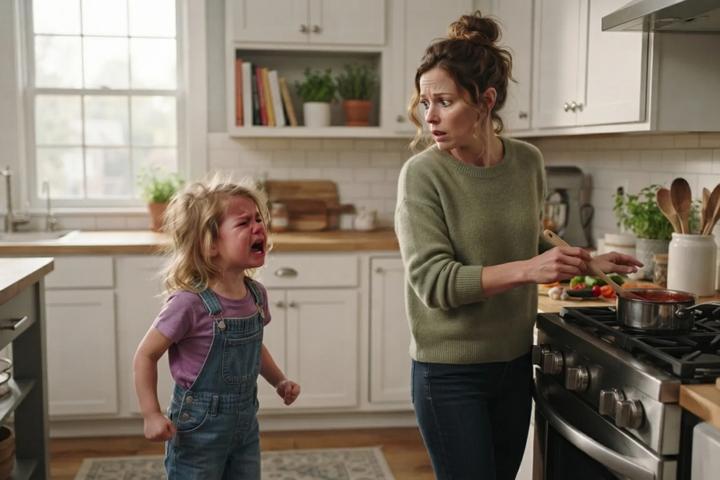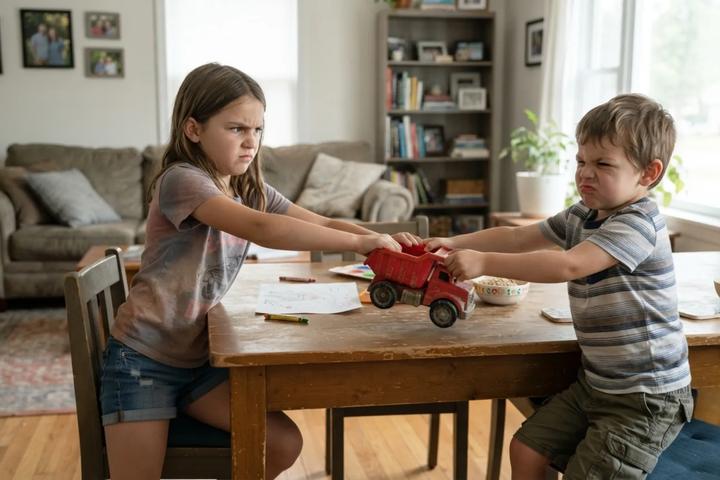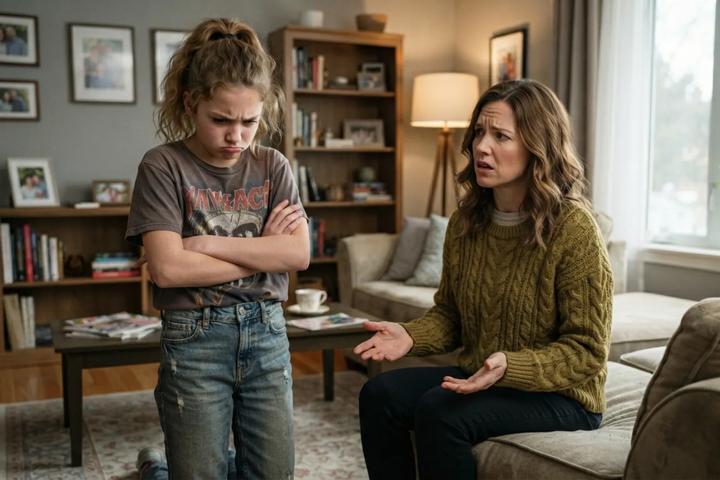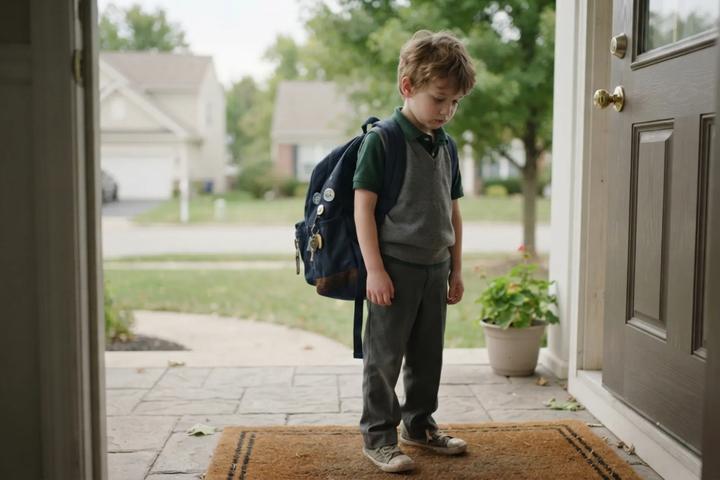
I’d already asked twice. Normal voice, reasonable tone, no drama. Nothing.
Asked again. This time a little slower, as if the problem was the speed.
Nothing.
On the fourth try, something shifted in my voice. Not quite a yell. More like that other thing — lower, shorter, with no room left to negotiate. And he moved.
And I stood there, somewhere between the relief that it worked and a discomfort I couldn’t quite name.
Why only like that?
What I learned from watching
There’s something I took a while to understand about young kids: the present moment is incredibly powerful for them.
Whatever’s in their hands right now, whatever’s happening right now, is competing with any instruction coming from outside. And most of the time, what’s in their hands wins.
It’s not stubbornness. It’s not manipulation. It’s a kid being a kid — with a brain that’s still learning how to switch channels.
When the tone shifts — when the voice gets lower, shorter, with less room to negotiate — their nervous system registers something different. Not a request anymore. A signal that the situation has changed levels.
The problem isn’t that they only listen when we yell. The problem is what happens after we figure out that it works.
How the cycle settles in without anyone choosing it
There’s a mom I know who described it like this: “I didn’t notice when I stopped asking once and started going straight to the fifth-time voice.”
It makes sense. The brain learns from what works. If asking calmly doesn’t land, and asking in that other voice does, the shortcut gets shorter every time.
And on the other end, the kid learns too. Learns that the normal request is just background noise. That when the tone changes, then it’s real.
Nobody chose this. It just happened. And then suddenly you’re inside a dynamic you don’t quite recognize as yours anymore.
The day I tried something different
One afternoon, instead of calling from the other room, I walked over to where my son was. Put a hand on his shoulder. Waited for him to look up. And then asked.
It worked the first time.
It wasn’t that I’d found some formula. It was just that I changed the channel before opening my mouth. Physical distance dilutes the request — you’re talking to the room, not to him.
Another day, I tried giving a heads-up first: “in five minutes we’re going to put the toys away.”
The transition still wasn’t perfect. But it was less hard. Because small kids don’t just shift gears like that, out of nowhere, with no warning — same as we don’t love it when someone changes the plan on us with no notice at all.
About the times I yelled anyway
It happened. It’ll happen again.
There are days when patience runs out before the opportunities to use it. Nights where I lie there going over what I should have done differently — that mental list that always shows up after he’s asleep.
What I’ve learned is that the goal isn’t to never yell. It’s what comes after.
When things calm down, I sit beside him and say something simple: “I lost my patience and I yelled. I didn’t need to yell. I’m sorry.”
No ceremony. No long speech. Eye contact and done.
He usually looks at me with this expression that’s somewhere between very serious and mildly baffled — like it’s simultaneously extremely significant and slightly improbable that a grown-up is actually apologizing for real.
But something stays. I know it does.
What this isn’t really about
At the bottom of it, this isn’t about yelling or not yelling.
It’s about what the kid is slowly learning about how things work. If the calm instruction carries no weight, they learn it carries no weight. If the adult comes back after getting it wrong, they learn that people come back after getting it wrong.
This is slow work. Made of afternoon by afternoon, request by request, days that go well and days that don’t.
But it’s in that accumulation that something shifts. Not all at once. Gradually, in ways that are almost impossible to see while they’re happening.